

So this is a very special blog post! (and a bit of a long one, sorry, — probably best to read on the actual Substack app, if you’ve started it in your email)
Over the past few months I’ve been developing, testing, and fine-tuning a Lego-based game that I’ve also been using in my Lego therapy sessions. I’m really passionate about this and part of why I’m sharing it here and now is to gauge general interest — to see if this is something that has longer legs. Basically what I’m saying is, let me know if you’d donate to a kickstarter if I were to set one up or if you think that’d be even worth it, lol :)
Anyway it’s called “Bricktionary” — which I’m officially coining and poor man’s copywriting here, thank you:)
So here it is and I hope you enjoy…
The game: Bricktionary
It’s like Pictionary but with Lego. Basically, I’ve designed and drawn over 120 different “prompt cards”1. Each card has a different challenge for something to build, and an accompanying image to go along with it.2 You can see examples below, but my I have a healthy mix of the following categories in my cards:
Animals
Food
Recognizable characters (these are catered to whatever age group I’m working with. Younger kids get more Disney, older teens might get characters like “Ghostface” from the Scream franchise).
Simple ordinary “things” (Microwaves, phones, etc)
Harder/more complex “things” (roller coasters, bridges, etc)
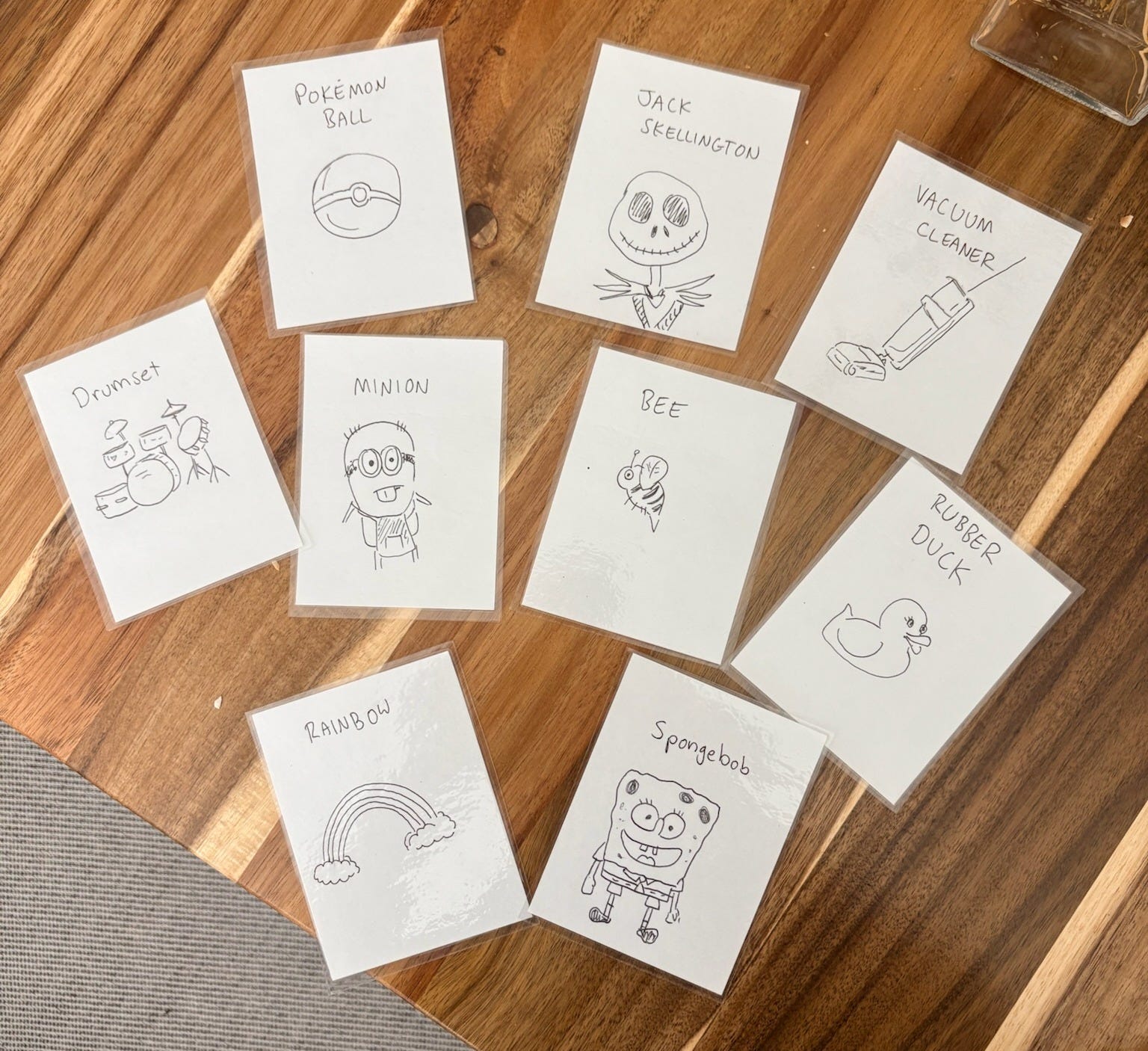
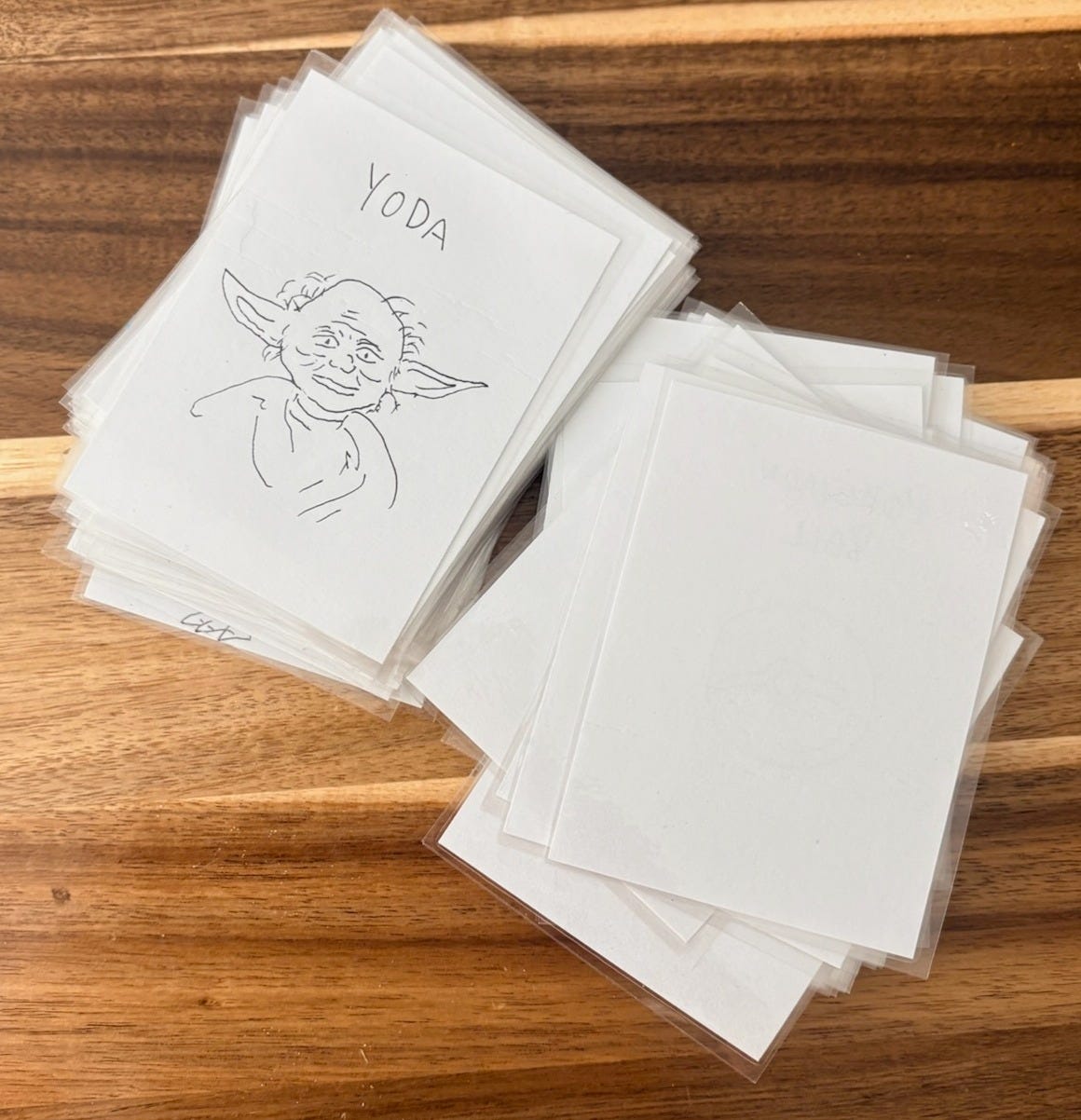
The idea is that you’re challenged to build what’s on the card out of Lego, under a ticking clock. You try to get your teammates to guess what your building before moving on to the next card. Whoever has the most amount of “correctly guessed” cards wins 3
Here’s the official rules and way-to-play for my Lego therapy sessions:
To get set up, I have everyone take a seat around a communal conference-style table. But you could play this on the floor in your living room or at your kitchen table just as well! I then pour out a full bin of randomized Legos on the table, and I also provide my small pieces, decorative pieces, and minifigs.4 Then unless there is a volunteer, the youngest person at the table goes first. From there, we go clockwise around the room.
When it’s your “turn” — I set a timer for five minutes. Once the timer is initiated, you pull your first card from the deck. 5
You then attempt to build whatever is on your card as quickly as possible.
You can ask your teammates (others at the table) to collect and send over specific types of pieces or colors that you may need. Just say, “I need reds!” and everyone else should look for red pieces and send them your way. This is an important detail that keeps everyone at the table engaged even when it’s not your turn.
Then, as you work — everyone starts to guess what it is that you’re building. As soon as someone guesses correctly (it has to be the EXACT wording on the card), you keep the card and move on to the next one. You don’t have to worry about deconstructing before starting your next card — we do that in between people’s turns.
Make sure you time it out so everyone around the table has time to go at least once. Adjust the timer limits accordingly, but keep it equal for each participant and you should never give people less than two minutes (it’s just not enough) or more than seven (it’s too long and boring if it’s not your turn). If you have time for TWO rounds, even better! When this happens, I add special challenges to the second round — like only building with one hand, or with your fingers crossed, which kids get a kick out of!
At the end, everyone counts up their cards (if you want to play competitively for a winner). Otherwise, we just clean up and congratulate one another and laugh about the crazy builds!
Challenges I’ve Come Across
The BIG challenge, as you can imagine, is that kids can get stressed out about not being good enough at Lego to play the game.
Some particularly anxious kids might ask to bow out of the game all together because they don’t want to be in the spotlight. If this happens, I usually partner everyone up. That way NO one has the spotlight all to themselves, and people feel like they have support. This usually works to help this type of client stay involved.
But even then, once everyone has agreed to play the game — sometimes there will be minor “panics” about not knowing how to build whatever is on their prompt card. If I’m playing for fun with friends and family, that’s fine, that’s all part of it.
But in my Lego therapy groups, this is something I’m keenly aware of and try to keep an eye on. And my main way to combat this is basically two things:
I remind my clients they can always skip a card if they want to
I’m always “out” of the game (because I drew the cards) — so if a client is having trouble and wants to show ME the card, they can do so and then I can help. I’ve personally built a version of every card I’ve drawn/designed, with the same bricks I use in my groups, so I have quick and easy and ready-to-go ideas of which bricks to gather that I then send to the kid and help assemble. This is why it’s so important, as the group facilitator, to practice this ahead of time and know your way around the bricks, especially when dealing with the clientele that I work with.
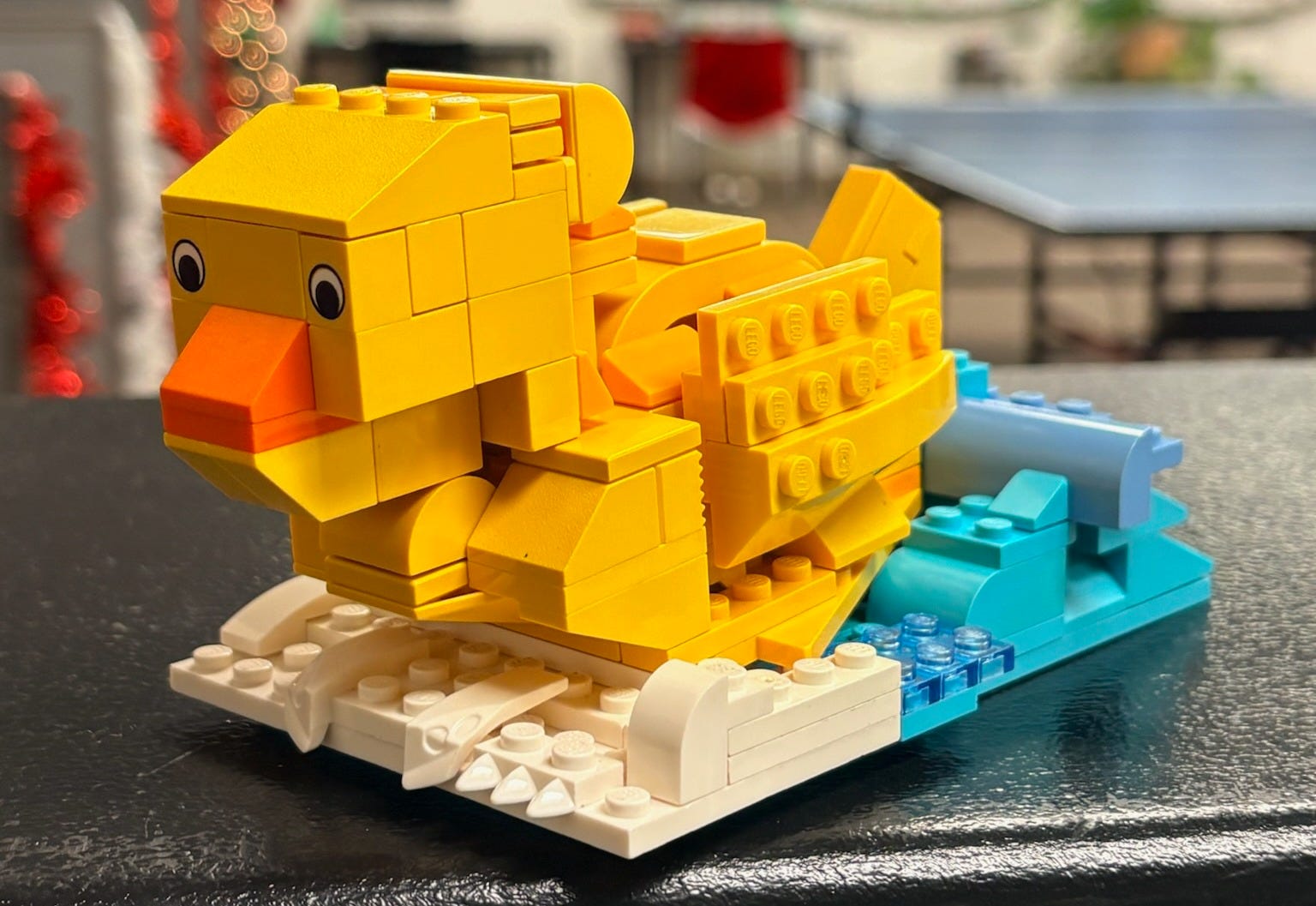
And the last big challenge that comes up during Bricktionary (especially in the therapeutic settings) is that some kids can’t give up their “perfectionist” tendencies. But Bricktionary is not about making Lego Master-level builds. You only have five minutes. It’s not enough time to create a polished build. Just like in Pictionary, you’re not drawing masterpieces. So I remind my clients that this is like quick-doodling with Lego. The idea is to, as quickly as possible, get it good enough so that your teammates can guess what was on the card. That’s all! To illustrate this point, I’m including two example photos below. This first one is a rubber duck created during a full-length group (actually for my “Under the Sea” prompt):
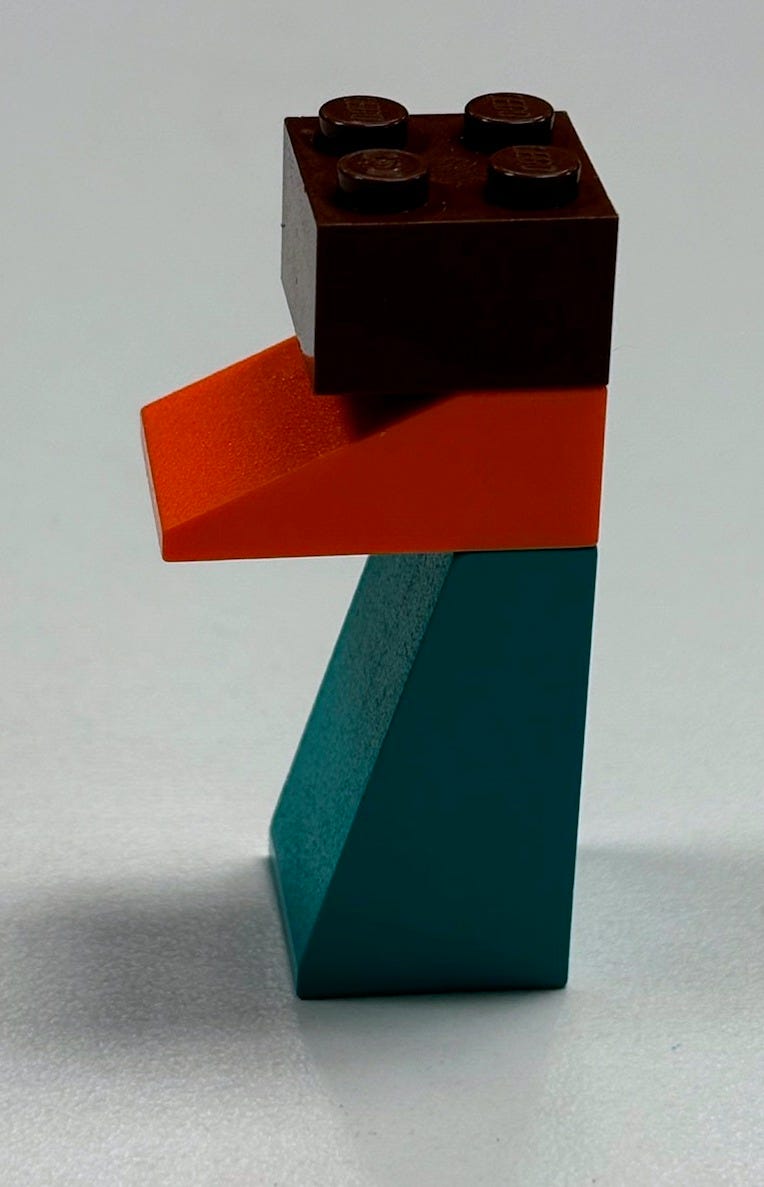
But this second photo is from a “Bricktionary” game where someone pulled the ‘duck’ card:
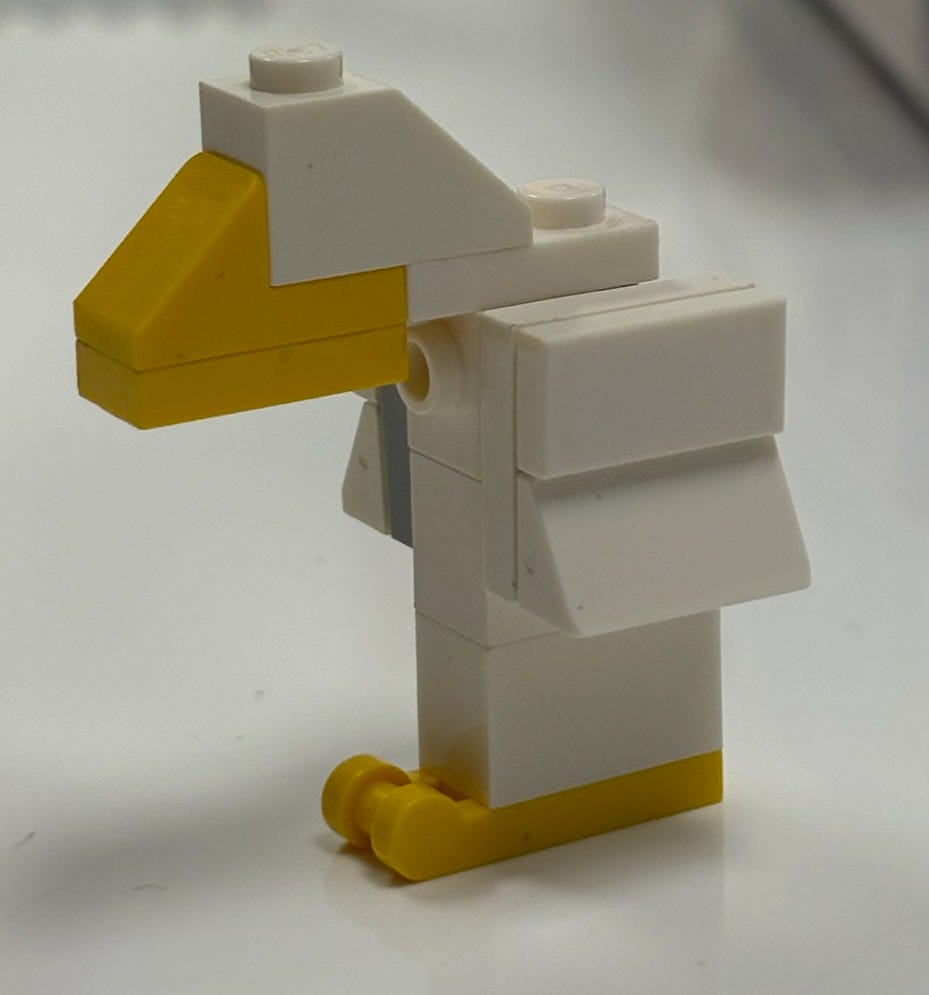
The Bricktionary duck was completed in less than a minute — which is actually crazy impressive — but it has less than 15 pieces total (compared to the roughly 250 in the first example). So it has far less detail, and is much blockier and smaller…and yet… people guessed “duck” right away, and this same client had time to burn through like 3 or 4 more cards within her timer. Showing an example like this might really help clients lean away from ‘perfectionism’ and go towards ‘minimalism’ and improvisation in their builds.
There’s usually so much energy (and commotion) when I’m playing Bricktionary that I almost always forget to take photos, but here’s some other fun examples — though I’ll try to take more soon and update this when I can!
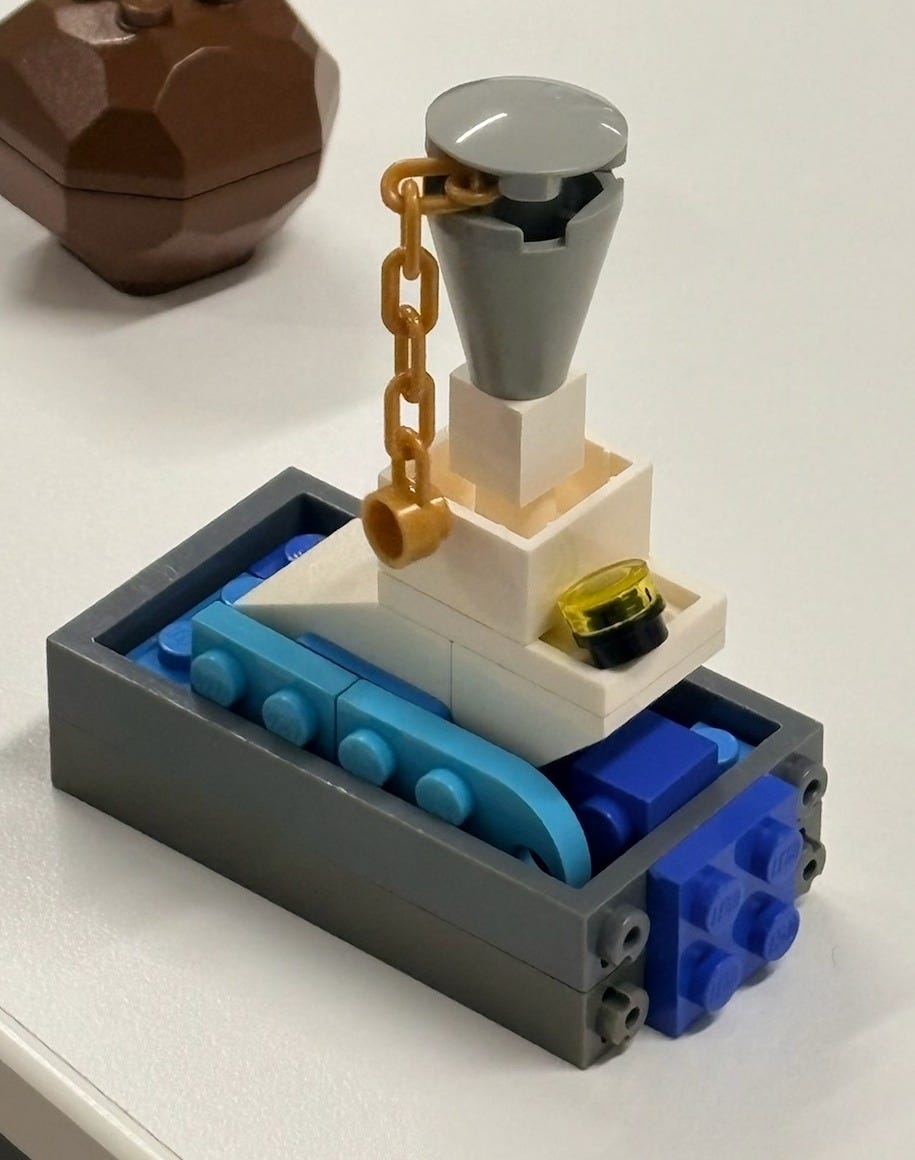
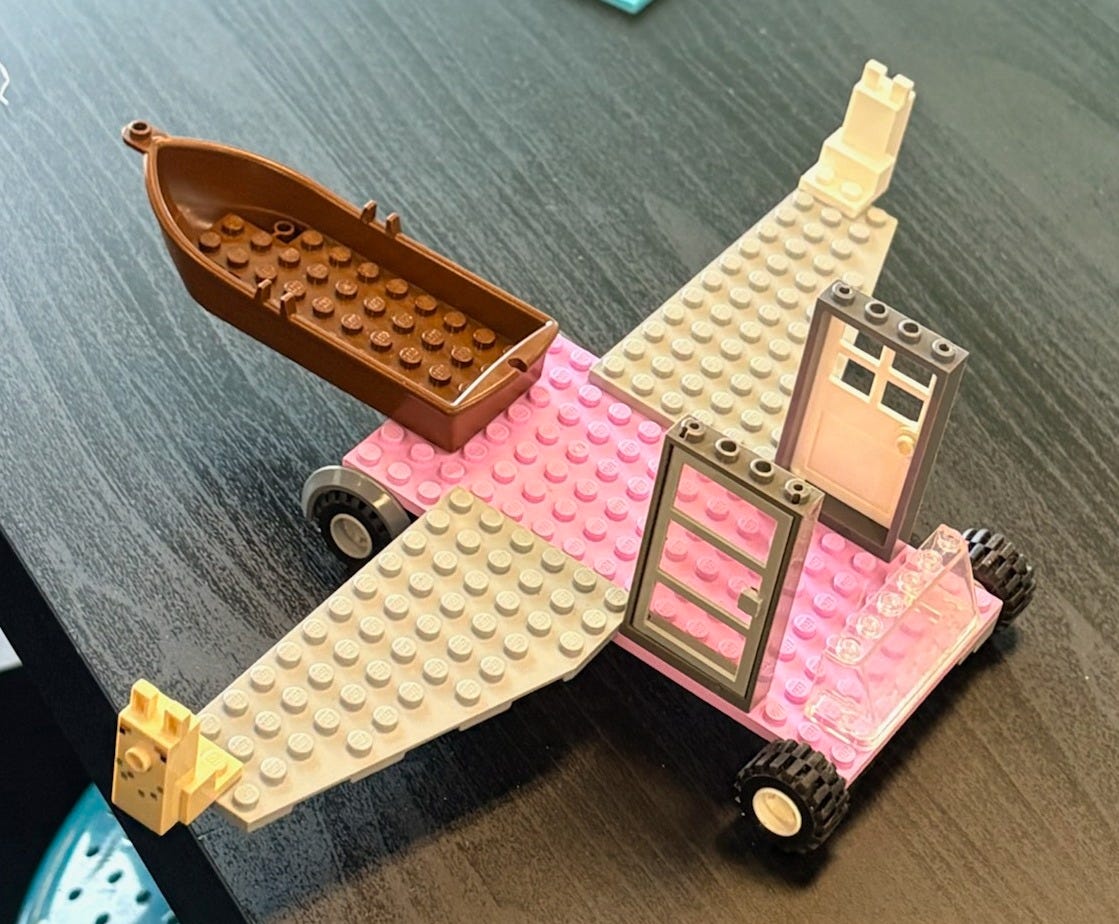
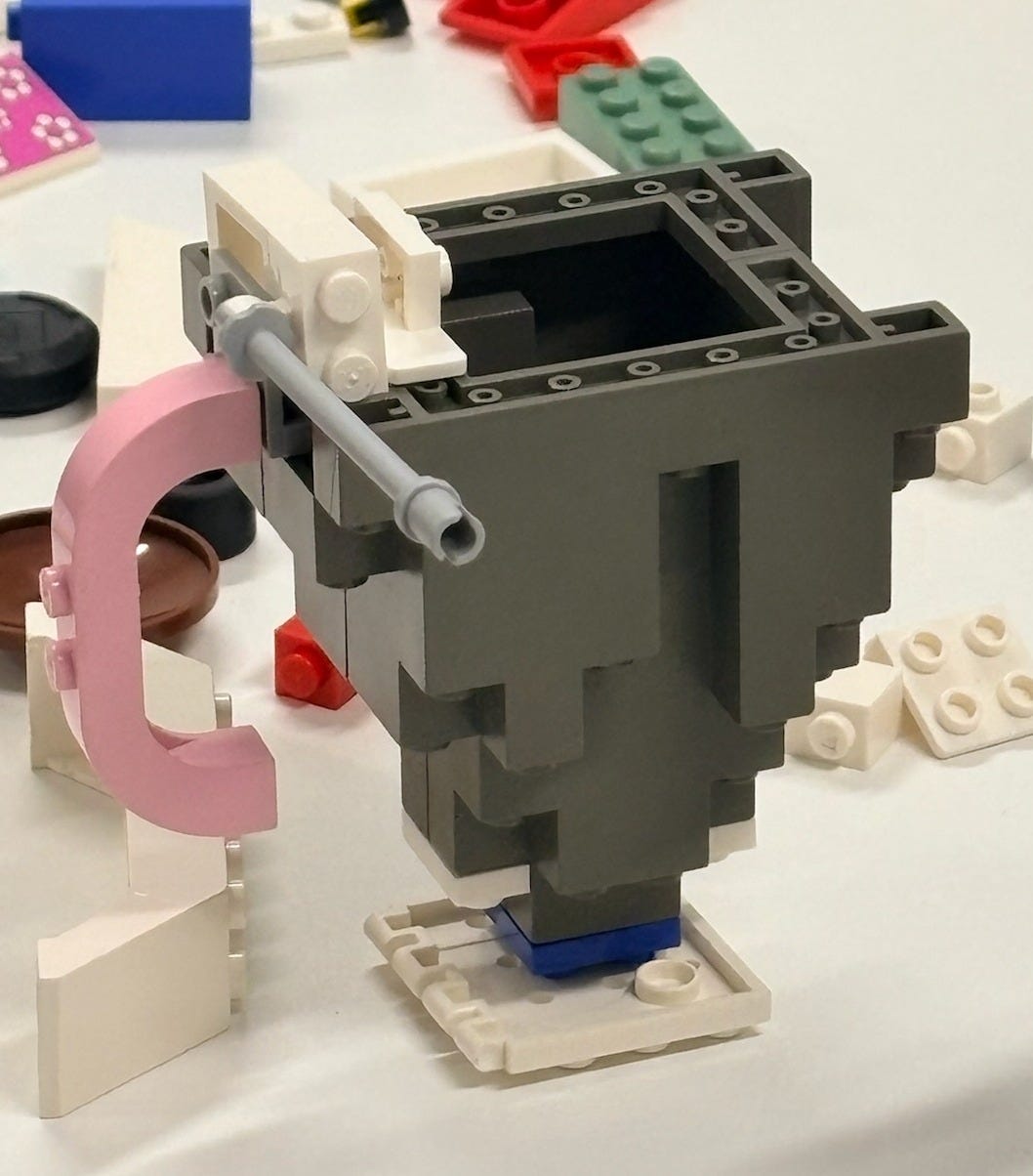
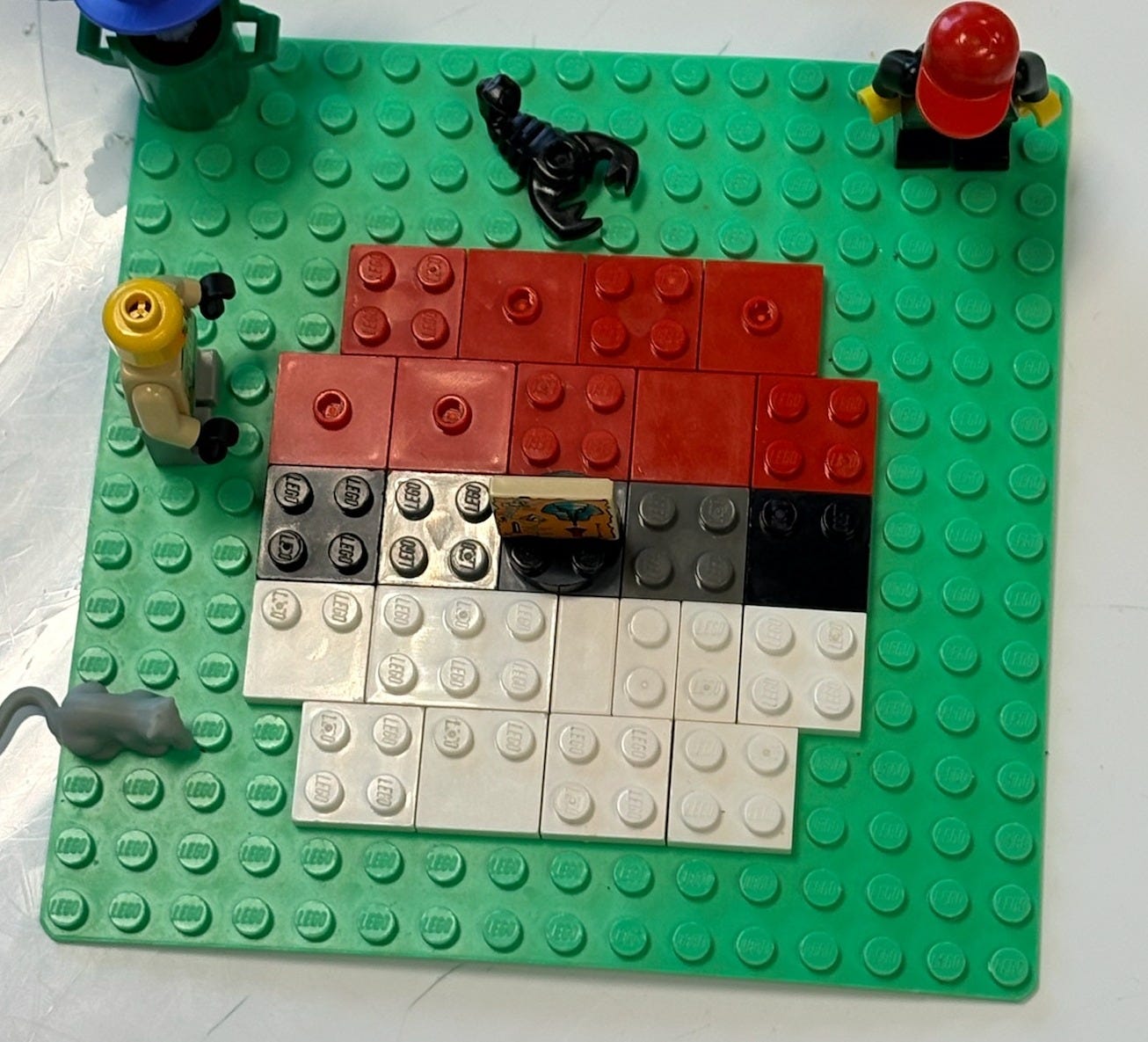
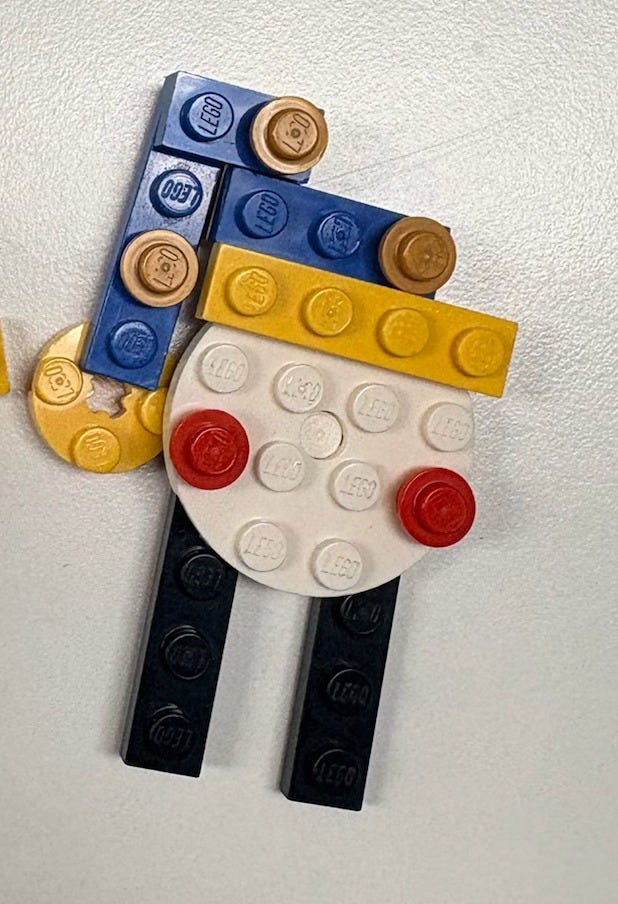
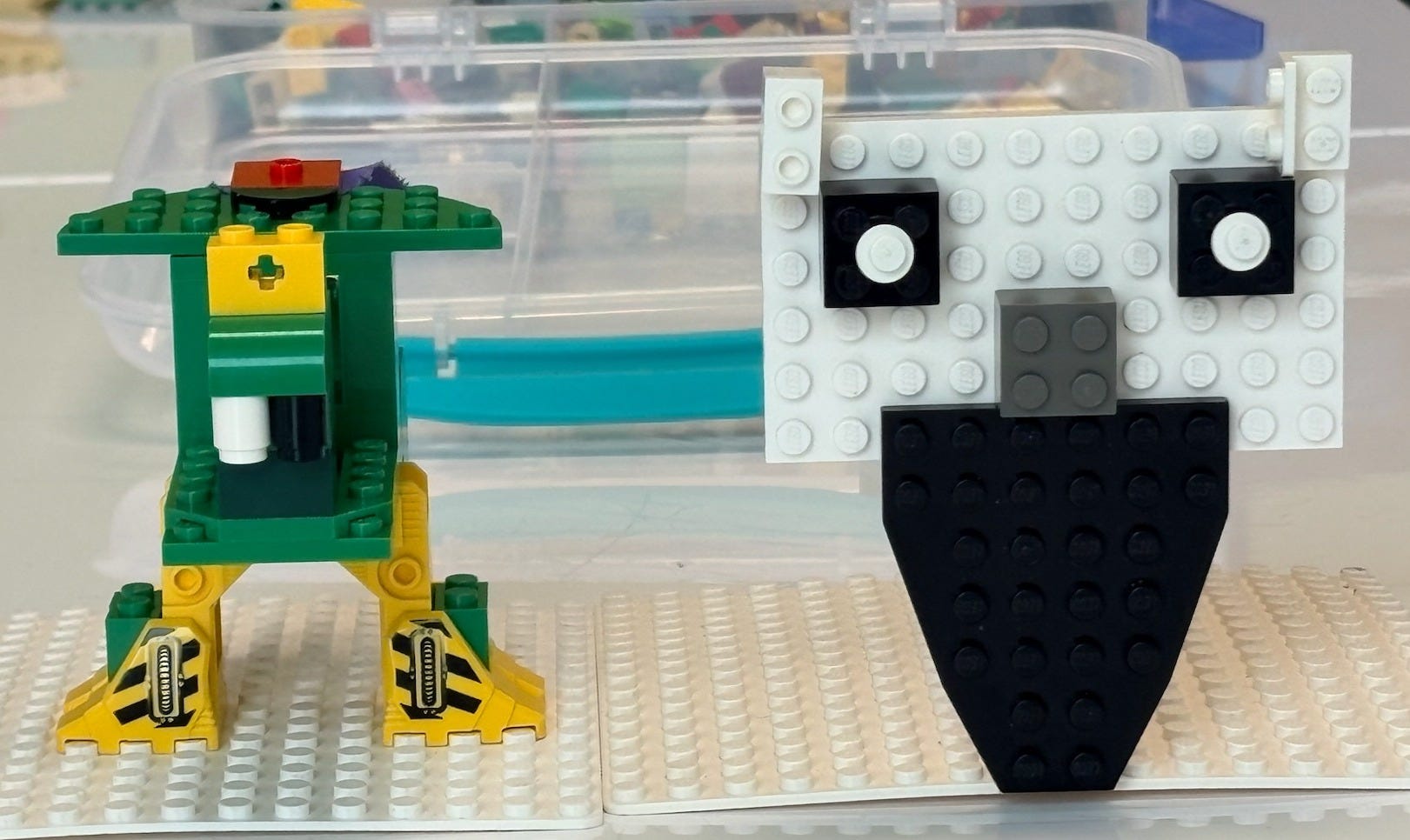
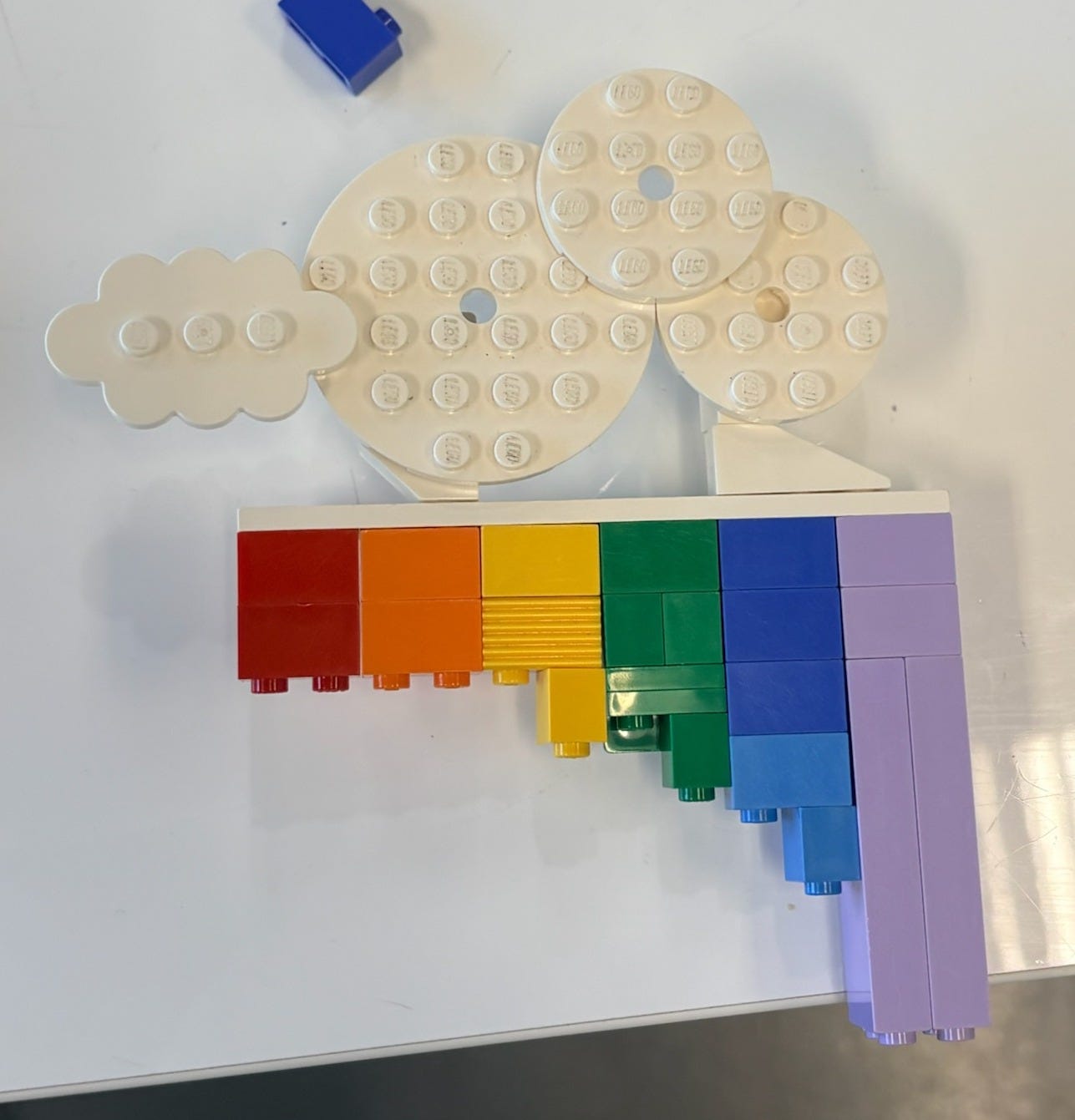
Therapeutic Benefits:
Okay finally, since this is still mainly designed for my Lego therapy groups, I want to talk about why this works so well, and what the kids can get out of it. Here’s an incomplete list of some of things I’ve seen:
First and foremost — it’s fun. This is another one of those prompts that creates a lot of energy and commotion and laughter and it tends to be a great bonding experience, where even some of the quieter kids joke around, laugh at themselves, and seem to feel like more “part of the group”. And giving these kids an hour of creative fun is always worth it for me.
Problem solving & Creativity. Ultimately, as fun as this is, it’s also HARD. Kids have to think quick and make on-the-spot decisions and get creative to put together these models in such a short amount of time. Even doing ONE of these in five minutes is hard. But I’ve seen kids get up to 7 cards in a single turn, and that takes serious problem solving and creativity.
Confidence boost. I don’t know why, but it always tends to be the quieter kids who may have never really “shown off” their lego models before that tend to really excel at Bricktionary. So I can see their confidence amongst their peers skyrocket and it’s like their whole personality shines in those moments.
Teamwork: Having everyone stay involved by guessing and sending pieces to the “builder” is a great way to remind everyone that one person’s success is EVERYONE’S success. And it’s a way to reinforce that a rising tide raises all boats kind of mentality.
And even though all of these benefits are extra worth it in my Lego therapy groups, they’re also not bad to experience on your own, just with friends and family! It’s honestly a lot of fun.
So yeah — like I mentioned at the top of this post, let me know if this is something you’d be personally interested in (I can even send you card templates and a full list of prompt cards & drawings), or if you think this something that you feel is worth further exploring / getting printed officially / even selling locally. All input is appreciated.
And as usual, thanks so much for reading and please tell your friends to subscribe!
— Asher
This was a whole process in and of itself! And honestly, I’m still working on it. Right now, these were drawn on basically flashcards that I then used a corner-cutter to round out the corners and then I laminated in my lamination machine. This is good enough for now, using them for personal use — but the reality is that I really should get them properly printed via a place like “gamecrafter” that specializes in printing cards. This is because as it stands, the cards are still a little see-through (which makes it so people can cheat, even if they don’t mean to) and also the lamination makes them very slippery and prone to falling all over the floor. So it’s something I might invest in, especially if I feel like there’s general interest in this idea out there. So let me know!
Also, I have a little over 120 now — but I have ideas for at least 100 more. Right now 120 seems to be good for groups of up to 15 people. But any larger (or if you play multiple, multiple times, I would need “expansion packs” so to speak :)
Also also, obviously, the drawings are very basic but I would improve these and add color, as well as a card back design, if/when I get them professionally printed!
At first, these cards didn’t have images. But then I found kids would struggle to remember what the idea looked like. Even something as simple as a “birthday cake”. It really helps to have the image there — because it’s still a challenge to replicate that image via lego.
Of course, at most of my therapy groups, I don’t actually call out a “winner” but rather, everyone is there to help and support one another. But I’ve played this in other settings with winners and the competitive nature can get really intense (and fun!).
To further expand on this, I’m dealing with an average of eight kids or so per group. So I usually use my standard fifteen pounds of Lego. I could probably get away with closer to FIVE pounds though, provided I still have a mix of colors, shapes, and sizes — since we never end up using most of the pieces.
Also, since some of my prompts are things like “owl” — I try to take OUT my actual Lego owls, so that people don’t use that as a “cheat”. Same for characters like “batman” — I’ll take out the official Lego Batman minifigs, etc, so people have to get more creative.
You can always SKIP a card if you don’t want to build what’s on there. Just slide it to the bottom of the deck, and someone else will get it later on in the game!