

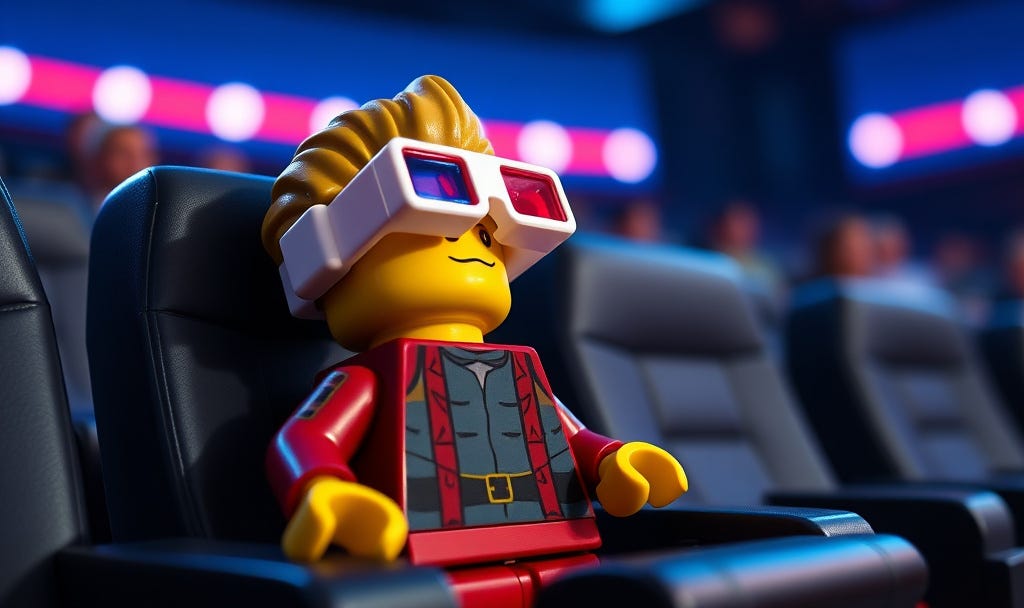
In honor of the Oscars this upcoming weekend, I wanted to post a prompt that’s always fun and exciting because it taps directly into something most kids and teens already love: movies and TV! The challenge is to recreate a scene from a favorite movie or TV show.
I’m a big movie guy myself, and I also teach creative writing groups with the same clients I run LEGO groups with. So, this is among my personal favorite prompts because I get to be thinking of and “living in” so many different movies, and I also get to introduce the storytelling angle into my LEGO groups in a more direct way. It’s a perfect prompt to whip out around this time of year (Oscar season) or whenever there’s a major blockbuster release that you know your clients are interested in (Last year, for instance, I did this around the release of the Minecraft movie, Zootopia 2, Wicked, Stranger Things finale, etc — movies/shows I knew my Clients were excited about).
Of course, if books or games are more their speed — they can also choose a moment from one of these to recreate instead. The point is about finding a narrative moment and to use your LEGO project as a vehicle for storytelling.
Tips & Tricks
This prompt works best when framed as visual storytelling. I really try to get my clients to be able to tell a whole story in their projects. Most kids naturally want to tell a story when working with LEGOs, so it’s not like this is an uphill climb. For instance, most kids will usually, without being prompted, name their minifigs and start to develop a backstory, lore, and then eventually a scenic narrative for whatever they choose to make. So what we’re doing with this prompt is essentially distilling and harnessing that natural impulse in a very clear and cut way. Here’s some tips to help this process out:
Focus on one moment, not the whole movie. You can ask your clients what moment do they think of, what’s the “movie poster” or the “trailer moment”. What line had them laughing the hardest. One moment became a “meme”? What was the turning point of the movie? The twist? The end? The beginning? The action or comedic set piece? All of these are great places to start thinking about a specific part of the story you want to re-tell through your LEGOs.
Add small references that fans will recognize. I have a pretty good movie vocabulary, and I try to catch a lot of the new movies or shows that I know my clients are watching. I’m not sure I would have otherwise seen the Minecraft Movie, for instance. But now that I have, I can help kids think of and add specific “calling cards” or easter eggs that add an extra “umph” to their model. For instance, building a custom chicken for a Minecraft-inspired model will really excite the kids (if you don’t know, you can look that one up…😉)
Consider what’s happening just before or just after this scene. Encourage the kids to act this out using their minifigs to get the kids even more engaged and excited about their projects.
Character Relationships - are two characters partners, or enemies? Lovers? Fighting one another or avoiding one another? Usually, the core of any movie scene is how the relationships between any two more characters are developing. Introducing this to my group discussions has really helped the builds be more complex and meaningful — and I think it’s been helpful in terms of getting the kids to think about their movies from this perspective rather than more surface-level details.
Also, consider this helpful guiding question:
“If someone didn’t know this movie, what would your build tell them?”
I think all of this together has really helped my clients generate ideas and build effective models that help re-create and re-tell their favorite stories.
And here’s just a few examples of just that!:
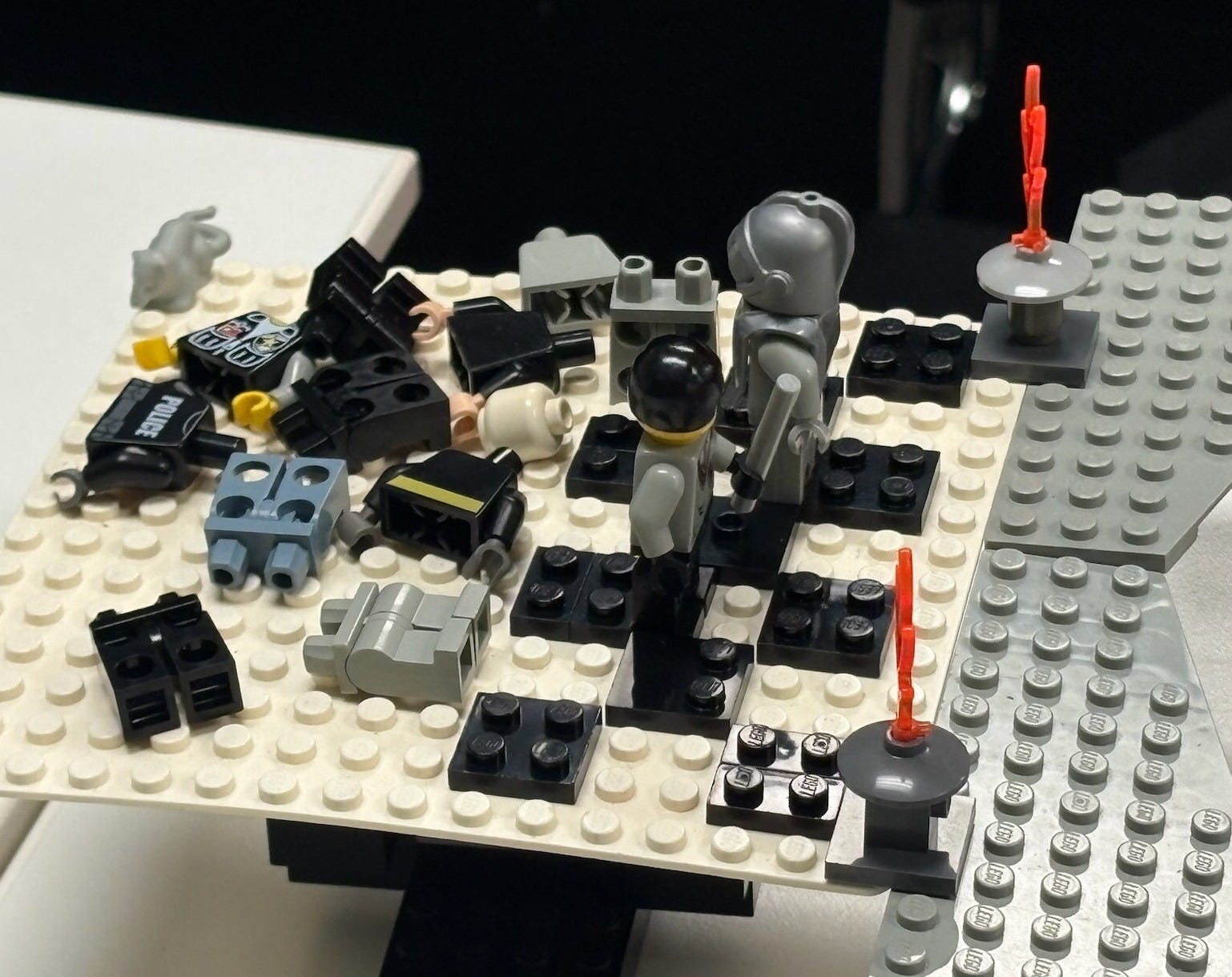
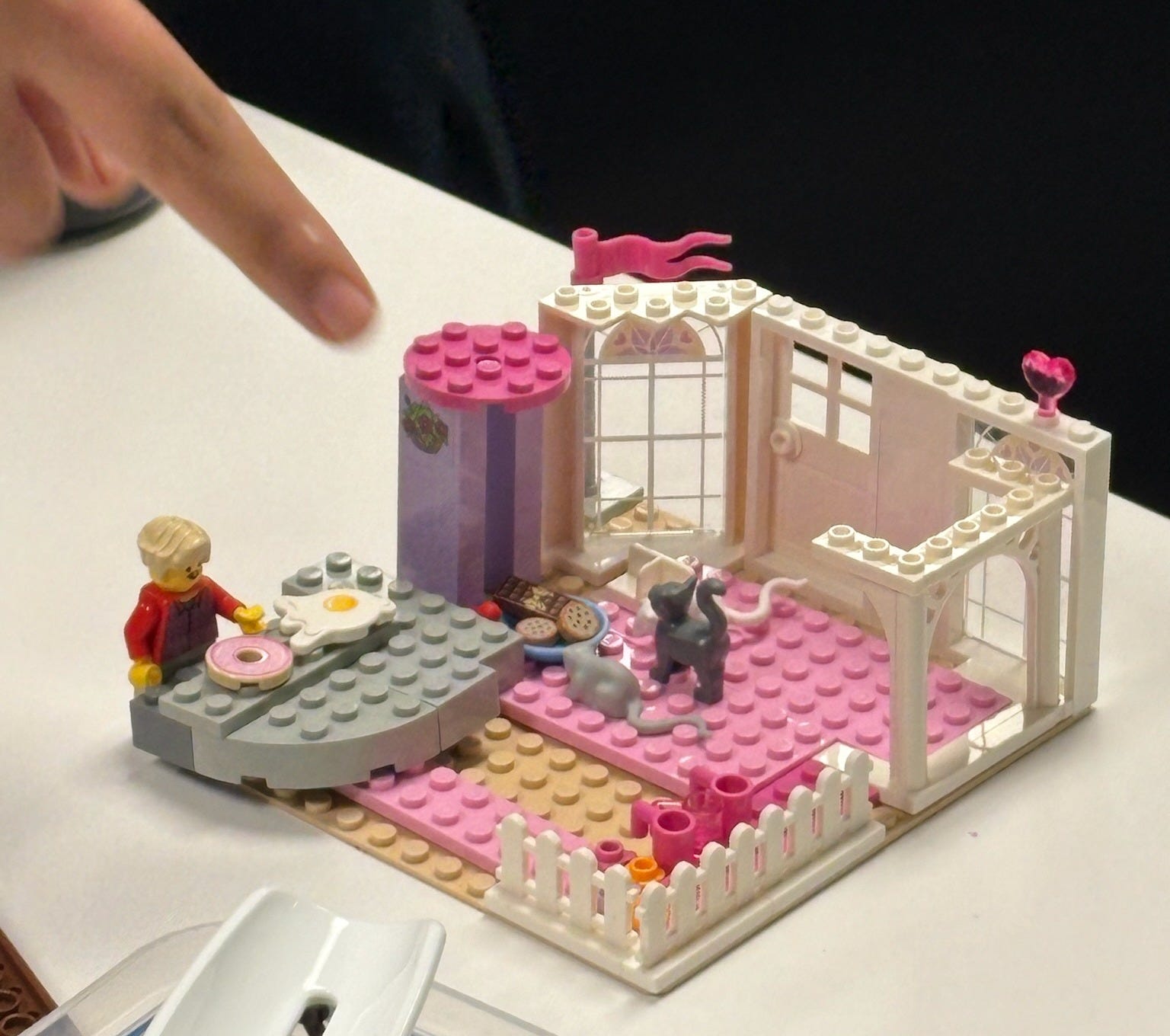
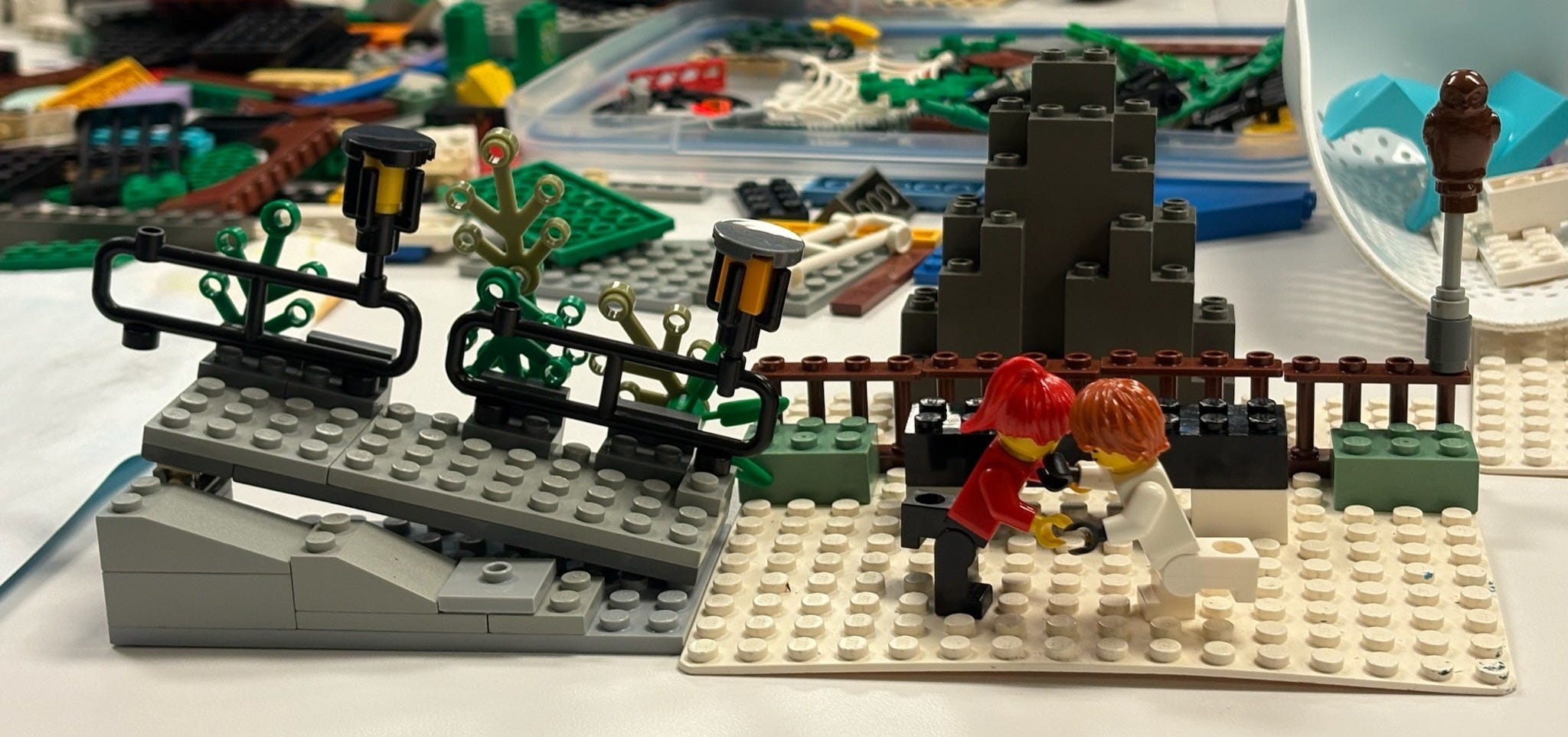
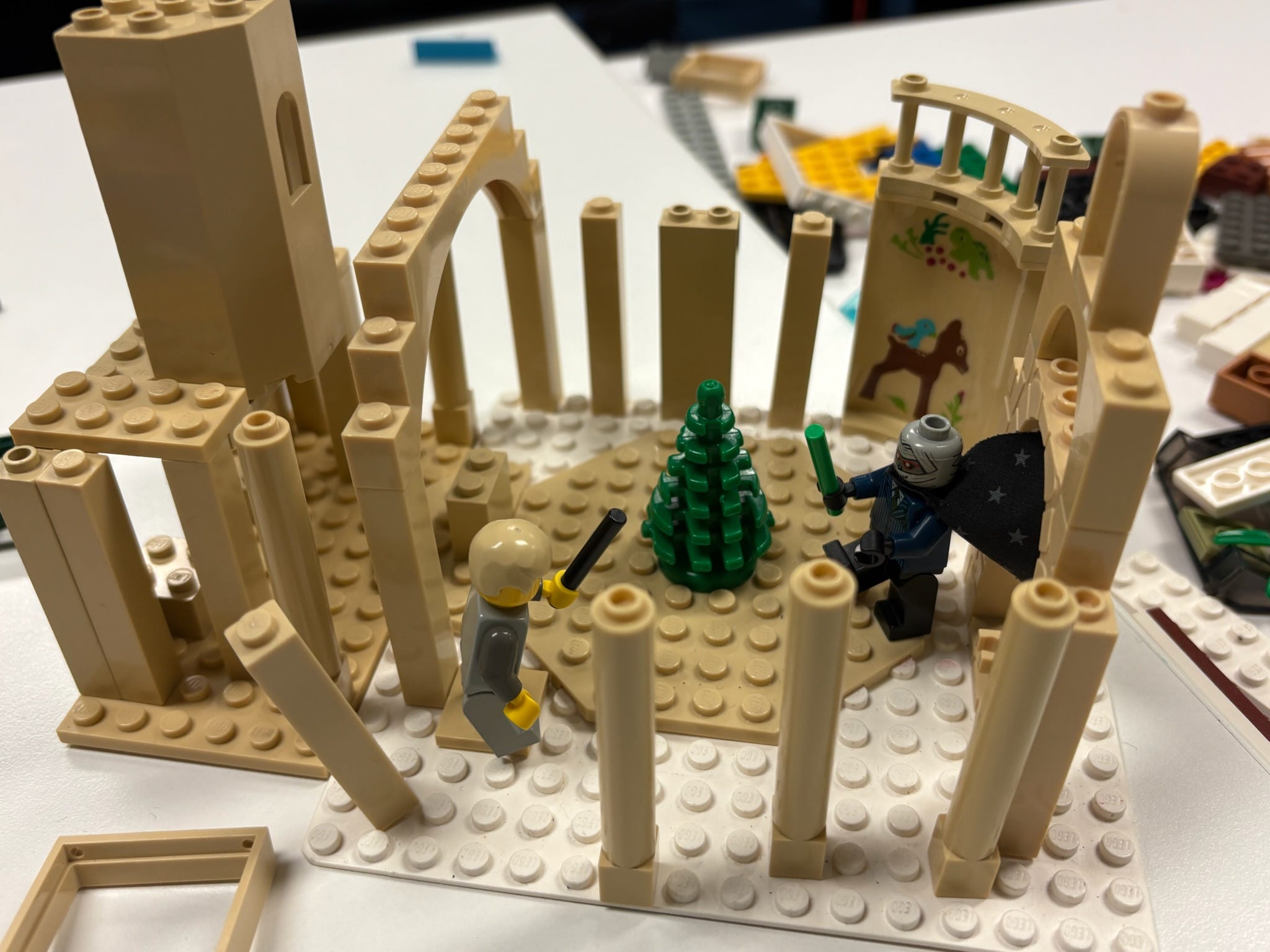
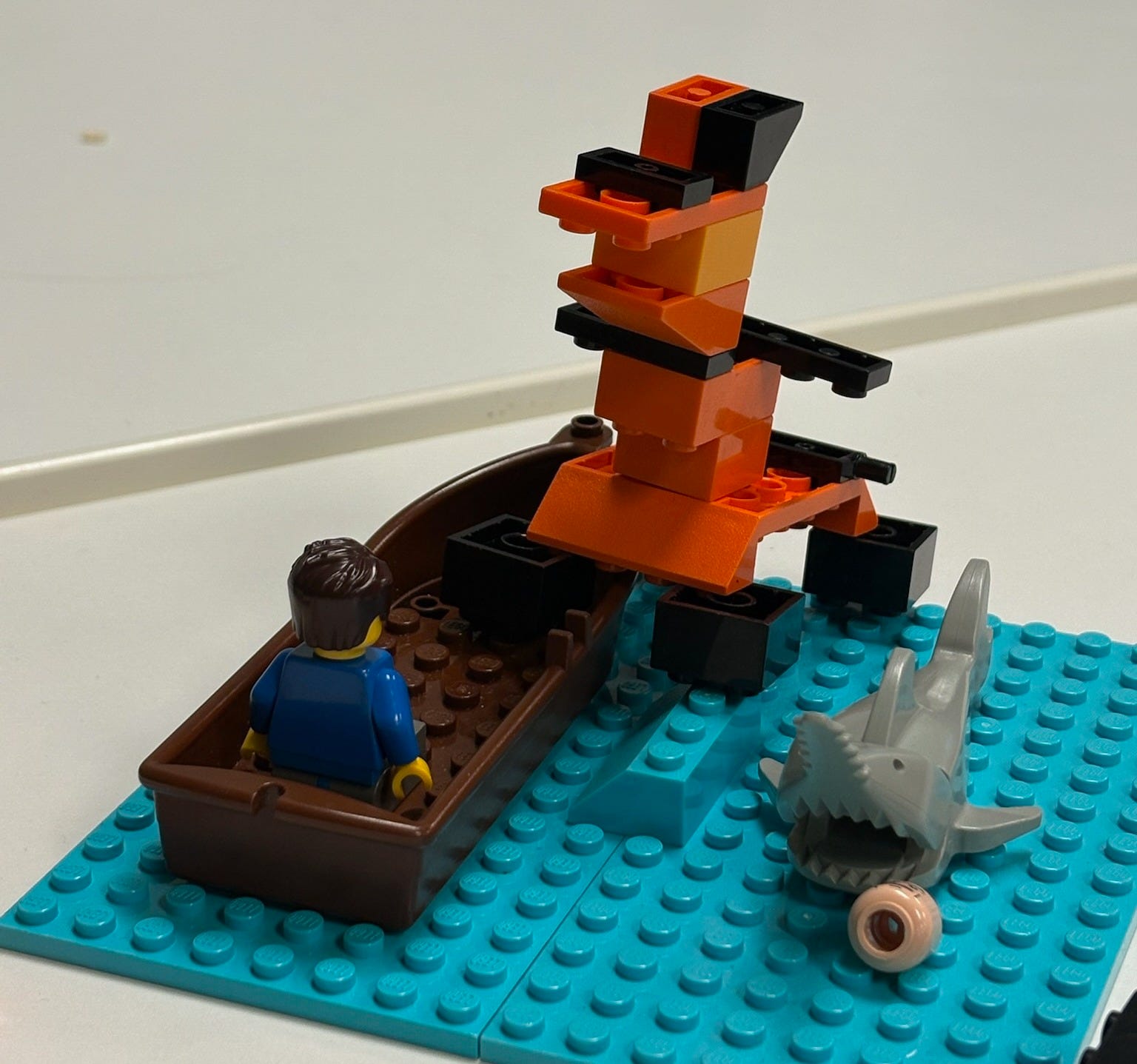
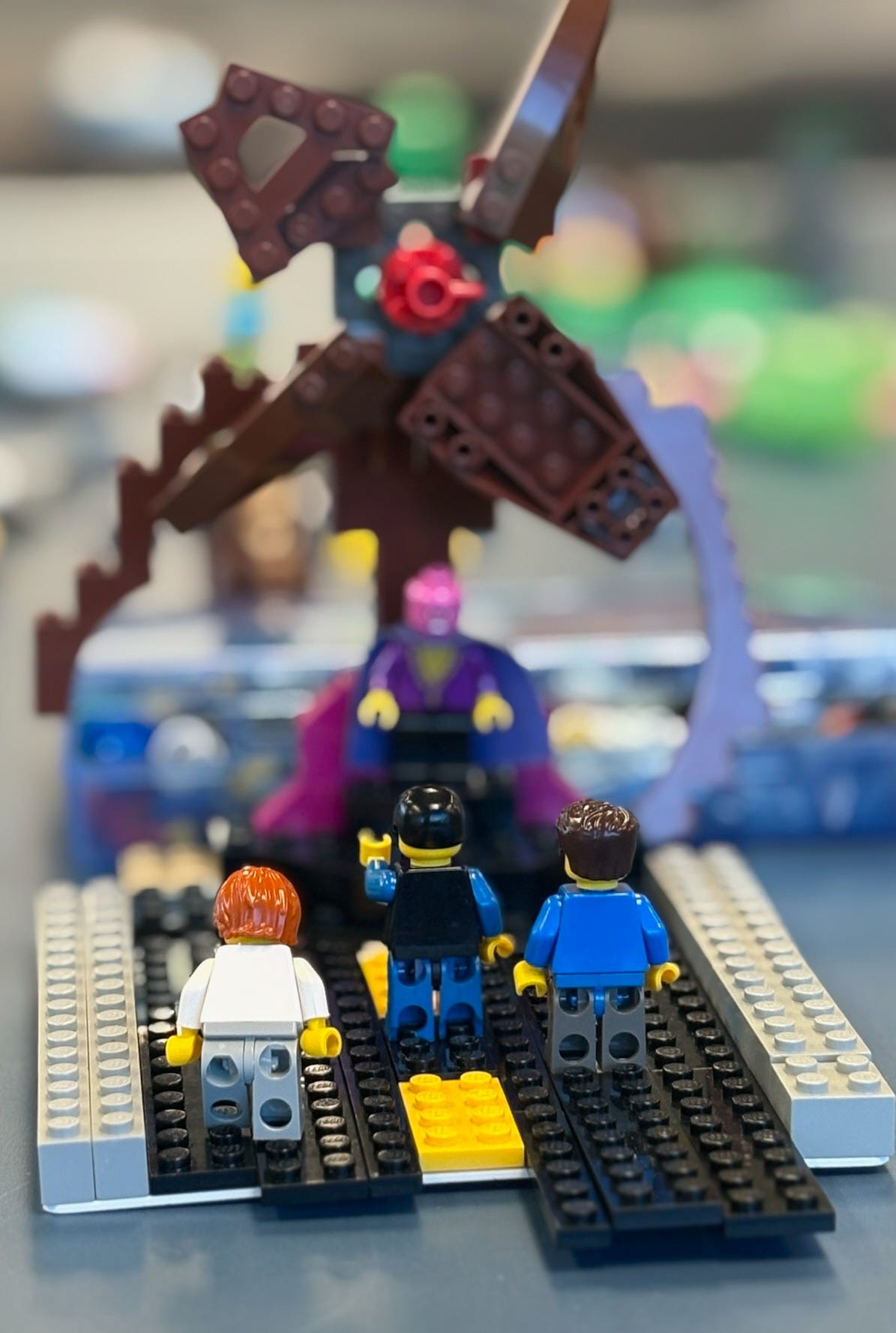
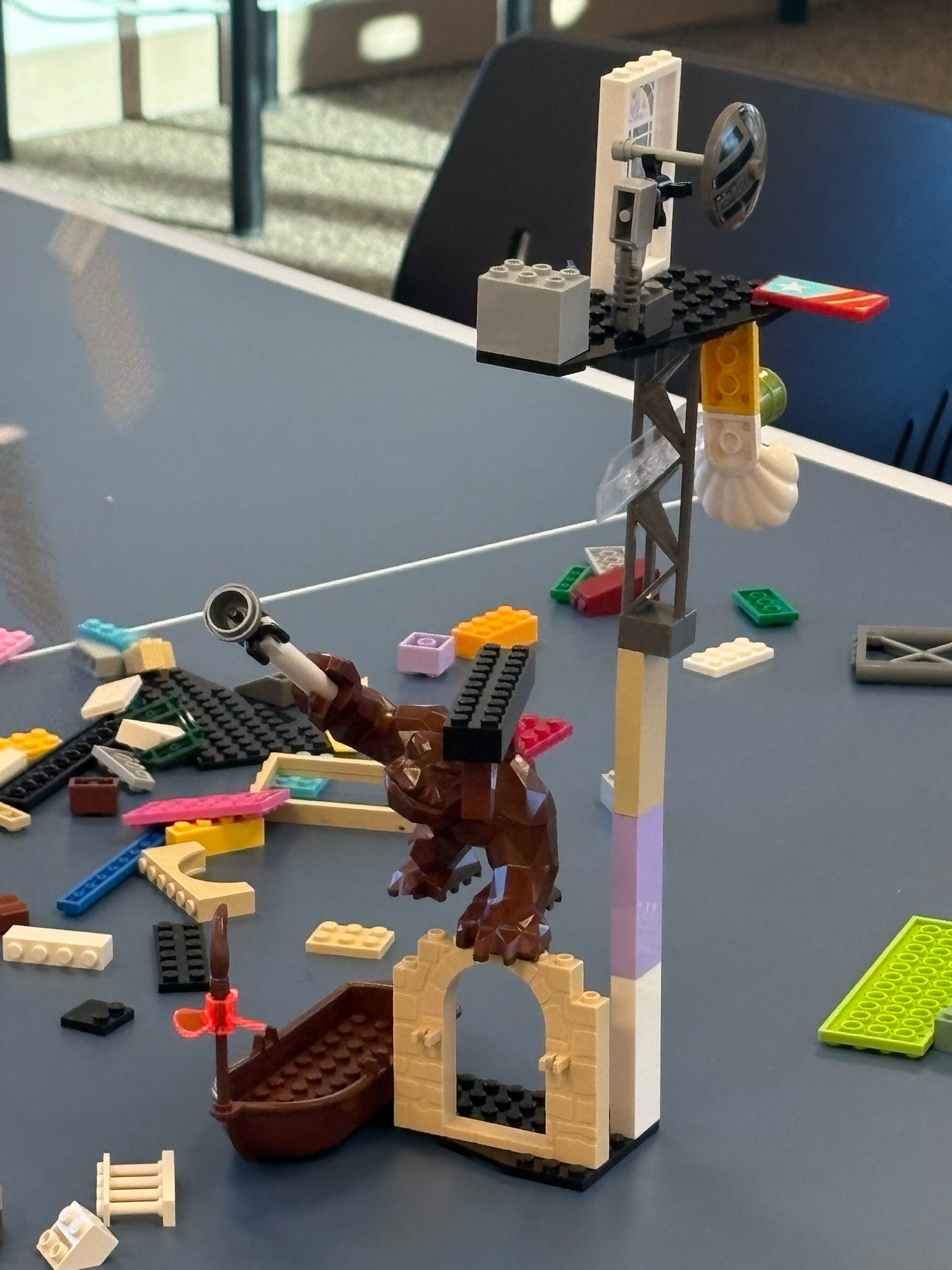
And this video, featuring one of the most advanced builds I’ve ever seen a client produce, showing a scene from ‘Inception’ where they bend the city in the dream world:
Or this one from Lord of the Rings (vocals by yours truly):
Facilitation Notes, Challenges & Boundaries
When running this group, I tend to run into 3 main challenges:
1. Scope
One common challenge is that participants try to recreate an entire movie.
When that happens, I gently redirect:
“What’s one scene you could pause the movie on and build?”
The reason I do this is 1) it makes it much less overwhelming and actually achievable within my one-hour groups. But 2), it also helps them think about scene-work and building specific moments that actually tell a story. Not just a broad-stroke idea but a real, tangible narrative.
2. Content & Safety
Some favorite movies can be inappropriate or triggering. To help manage this:
I don’t provide LEGO weapons (ever — in any of my groups). This frustrates some of my clients from time to time, but I just find it easier to manage all my groups this way. So that means no LEGO guns, swords, knives, or even things like hammers that could get inappropriate, fast. I DO however provide different color stick/pole pieces, which my clients can turn into interpretive “light sabers” or “wizard wands” — which arguably are weapons, but are imaginary so shouldn’t trigger any real-world violent memories that my clients may have. And even still, I patrol the scene-work to make sure nothing is too overtly violent, gory, or gruesome. I’m not a huge fan of censoring creativity, but it’s important for my Clients, especially in treatment, to have a safe space and I’m not running a free-speech workshop, I’m running LEGO therapy, so concessions have to be made!
3. Creative Block
Sometimes, when I introduce this prompt, suddenly my clients “never watch movies. Or TV. Or read books. Or play games.” (even though in previous weeks I can hear them talking all about their favorite content). This is a common pushback that develops from having moments of creative block. What’s happening is that in that moment they can’t think of their favorite movie, or a scene within that movie, so their immediate reaction is to reject the entire premise of the prompt.
I’m used to this, and I’ve found the best way to handle this is to not fight back. Okay, you don’t watch movies or tv shows? How about youtube channels or what’s the last book you read? Or comic, even? I present immediate alternatives and don’t make a big deal about it.
This usually ends the resistance for most Clients. But other clients will still get stuck. So I’ll open it up even more. What’s a movie you want to see? What’s a movie you would make? What’s your favorite genre?
If none of this works, I may at a certain point start outright suggesting ideas to my clients. If I’ve been working with them for a couple of weeks and I know they like horror/halloween-type stuff, maybe I’ll suggest making Frankenstein’s tower, or some ubiquitous horror “thing”. If I know they like animals, I might suggest “Zootopia”. If I know they play videogames, I’ll pull out references to a lot of games that were turned into movies (aformentioned Minecraft, etc).
Usually, one of these options will help break through Creative Block. Then lending my assistance in finding those specific details or calling cards can really help.
And one more very specific point on this: I usually have a fair amount of LEGO Dinosaurs in my bin. That’s because the kids love them (how can they not? They’re awesome). But the problem with these, in this prompt, is that it almost makes it too easy. The kids see the dinosaurs and right away they’re thinking of Jurassic Park or Jurassic World. If a group is feeling pretty creatively blocked, I let this be. But if I know a group can do better and can handle the challenge, I’ll make a rule: NO Jurassic Park builds. This forces them to think beyond the easy, which is good mental training for creative idea generation.
Therapeutic Benefits
Now I think this prompt has a ton of creative and therapeutic benefits. It kind of collects a lot of the benefits from my creative writing groups, and adds them onto more typical benefits from my LEGO groups. Here’s a short list of what I’ve found:
Narrative thinking: Identifying beginnings, middles, and ends is huge. It’s an incredibly useful way to think about and process one’s own life and stages within one’s life. And practicing this in “third person” via characters/LEGO gives kids a safe place to develop these mental tools that can then be applied inward, in “first person”.
Emotional & identity expression: Choosing a scene often reveals something about what resonates with them emotionally. In a similar way, favorite movies and characters often mirror values, fears, or aspirations — or simply just characters or situations that the kids identify with. It becomes almost a sort of “proxy” way of talking about themselves. Maybe they don’t feel comfortable talking about their frustration of being overlooked. But making a Judy Hopps, Zootopia-themed model is a safe way to explore these emotions in another character. This also in turn, usually, creates opportunities for social bonding when multiple clients share a passion for a franchise or a character.
Perspective-taking: Considering how others interpret the same story. This happens because they’re literally building the whole scene, almost from an omnipresent point of view. Even just having to make sure there is room to “fit” the antagonist or other side characters forces my clients to consider the presence and perspective of non-protagonist characters. I believe this all stretches the “empathy” muscle.
Creative reinterpretation: Learning that stories don’t have to be literal to be meaningful — and even giving the kids the option to change the outcome of the scenes, allows for creative control, what-ifs, and a greater understanding of cause-and-effect. These are all incredible storytelling skills to develop, but have practical therapeutic and emotional benefits as well.
During show-and-tell time, I’ll often ask questions about why they chose this scene, what various details represent, why they think the characters are doing what they’re doing, etc. — all of which I think deepens the above benefits and really nails it in during these groups.
In the end, this LEGO prompt lets them freeze a story in time, and also lets the idea of narratives and storytelling be more prevalent in future groups and weeks to come.
Thanks again for reading!