


This is another fun LEGO-building prompt where we get to flip things on their head (literally!) The Challenge:
Build upside down so that the studs face the floor instead of the sky.
It’s actually a very simple prompt (there is no other “theme” so Clients can build whatever they want)…but sometimes, the general concept confuses or frightens clients who don’t think they can handle it because it sounds complicated.
So I usually get this prompt started with an example and a short technical introduction. What really catches their attention is when I say we’ll be working with SNOT today.
…wait, what?
Yep. SNOT. Except in the LEGO world, “S.N.O.T” is actually an acronym for “Studs Not On Top”
I’ve covered some SNOT-building techniques in previous posts before. Most of the time, SNOT building uses “headlight-type” bricks that allow you to build not only upward, but outward (side-to-side) as well.
However, for this prompt, I ask my clients to use the less common, specialized form of SNOT building where the Studs are On the Bottom — or, as I like to call it:
SOB SNOT :)
Watch this video to check out a technically challenging build that one client came up with, with SOB SNOT and regular building combined into one:
While examples like this may make the prompt seem quite challenging and complicated, it’s actually simpler than the traditional SNOT work because you don’t need any special headlight-type pieces to make it work. In fact, most of the time you just use normal LEGO bricks for this. The only difference is you build it upside-down.
So even though I definitely take my time going over this different type of construction, I actually try to focus my groups less on the technical elements of this prompt and more on the opportunity to use this as a chance to shift their perspectives creatively…
An Emphasis on the Creative Side of the Prompt:
When I got back into free-building as an adult, one of the best tips I ever got was to take all my lego pieces and turn them around, 360 degrees, upside down, on their sides, every which way except for how they are “meant” to be used.1
This was such fantastic advice because it forced me to see the limitless applications of every LEGO piece — even pieces that seem at first to have very specific uses.
My LEGO canoe, on it’s side, can become a bookshelf. My LEGO X-Games ramps, on their sides, became a subway tunnel wall. And so on.
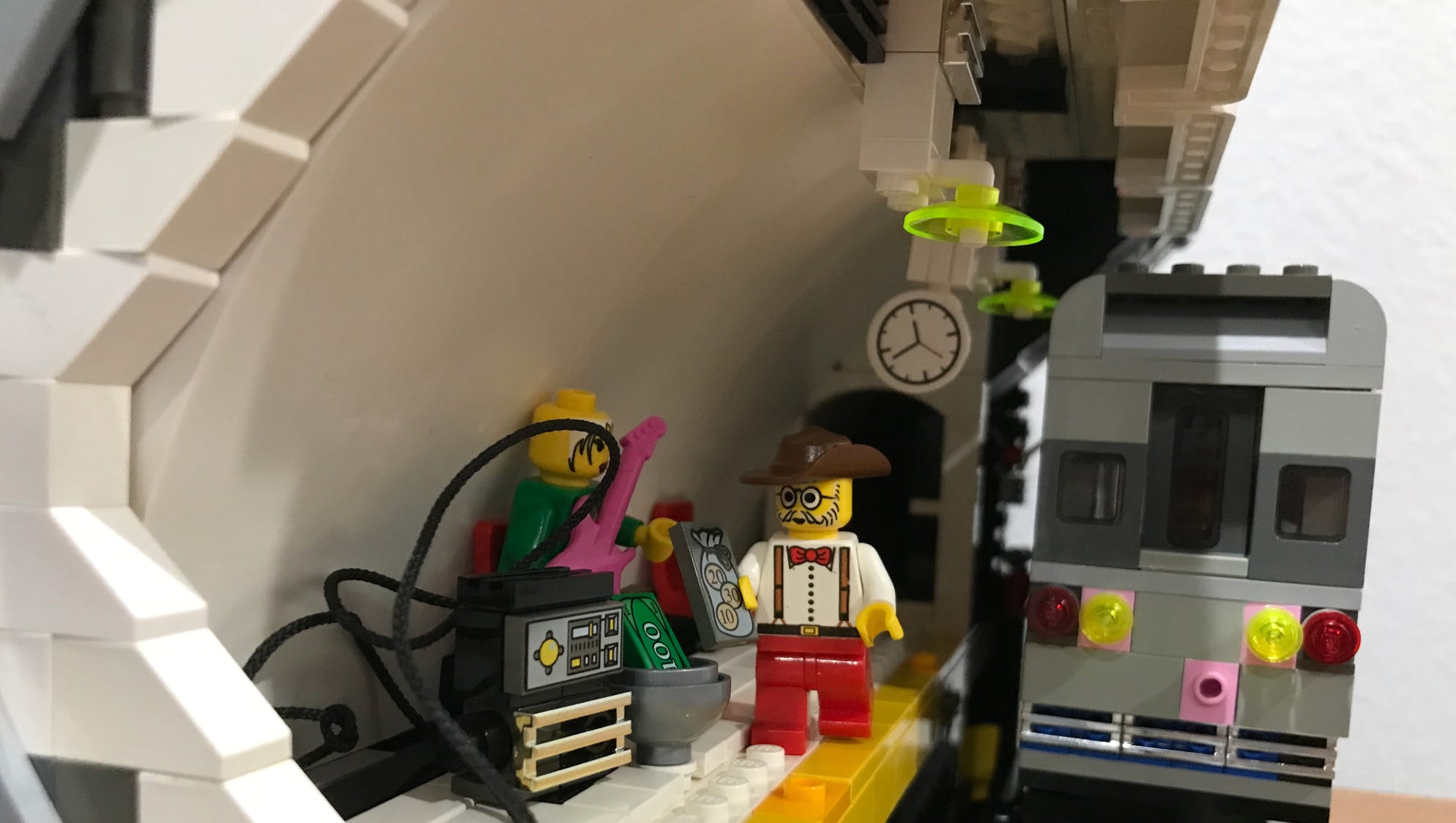
So for this prompt, I encourage all my clients to turn every piece upside down to see what they can become. I even usually give them one quick example to get their creative juices flowing. Often this example is based on these LEGO trees. Right-side up, they are trees — and at first that’s all you think they can be. But upside-down, the conical trees can become DRILLS that can drill all the way to the center of the earth. The more spherical trees can become cake batter mixers. I’ll ask my Clients what they think these pieces look like upside-down. This gets them primed to get into the right mindset, and they usually have a lot of fun with it as these pieces they’ve become familiar with in past groups suddenly take on whole new identities and lives.
All of this combined creates a really fun, creatively stimulating, and therapeutically beneficial prompt. Here’s a few more key benefits of this prompt:
Confidence-building – At first, most Clients think this is way too hard and complicated for them. But because it’s actually deceptively simple, most of my clients end the group with a big “win”. And this really boosts their energy and confidence.
Cognitive flexibility / Creative Adaptability – learning to see familiar objects from a new angle is a direct exercise in adaptability. It can also help train your brain to see every day items, or even problems they may be going through outside of group, in ways you might never have considered.
Letting go of control – breaking, re-building, and accepting imperfection can mirror deeper therapeutic work. It’s also very interesting because many times, people will actually construct their models right-side up, with the intent of “displaying” them upside-down. This means that the end result will be very different than what they are currently looking at while building. This helps let go of control and encourages my builders to trust themselves and be excited about the “reveal” of the end result. And even when this turns out totally different than intended, this often leads to laughter. And I’ve found these moments to really demonstrate the power of using play as a form of stress relief.
Here are some awesome examples of what my clients have constructed with this prompt:
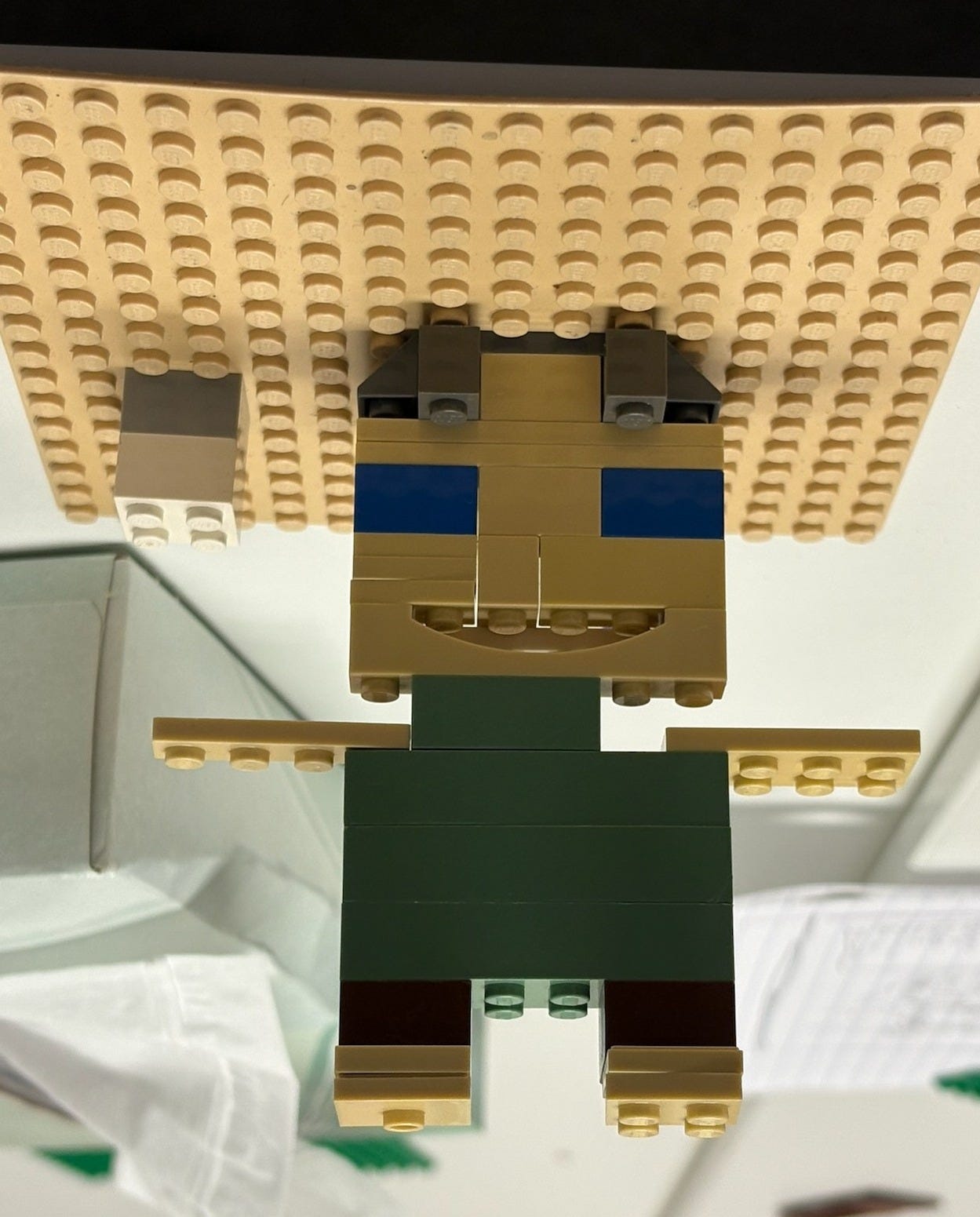
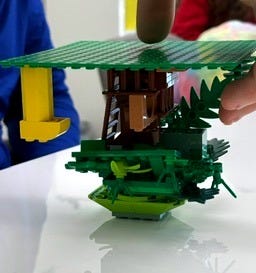
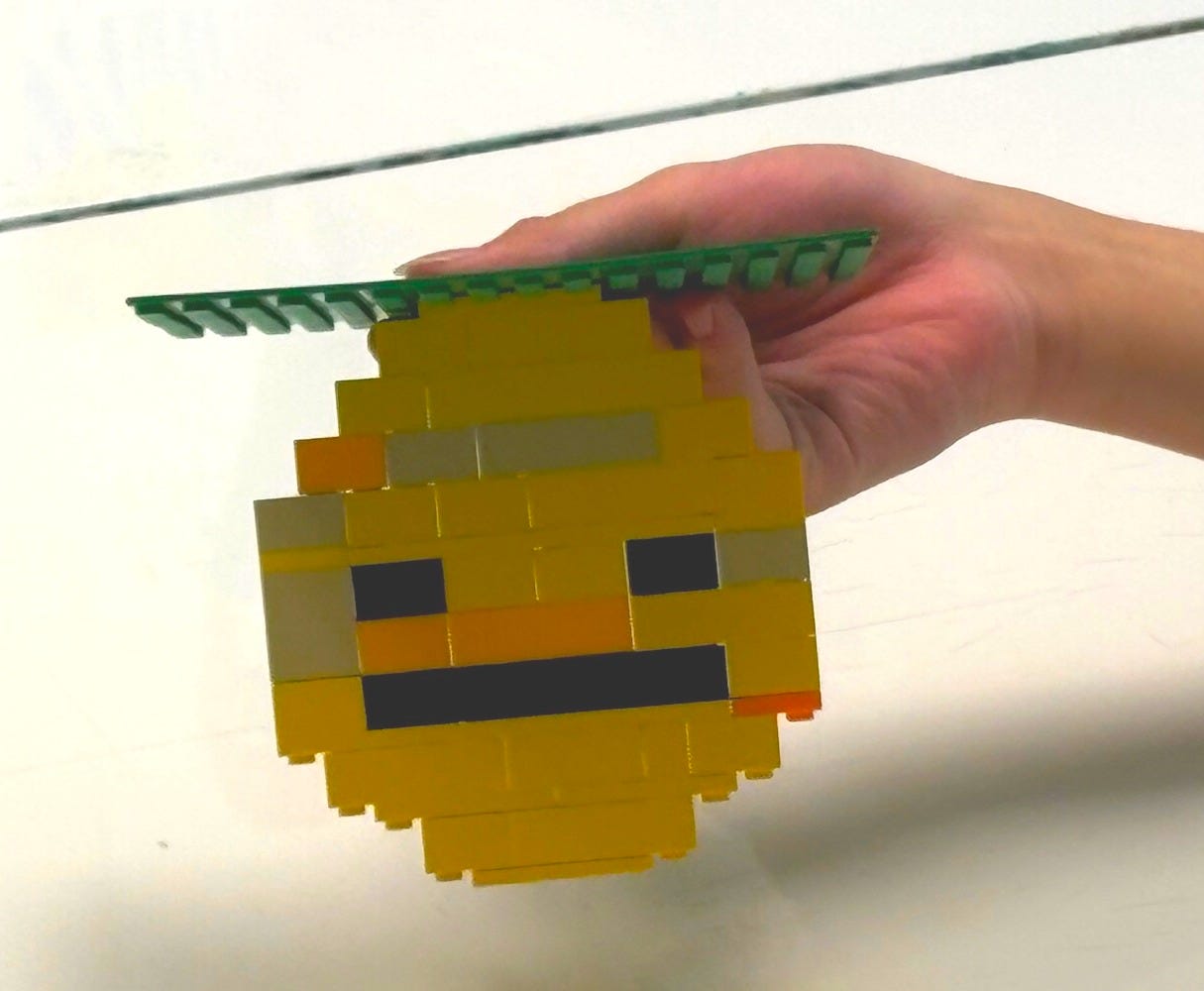
Then at the end of group, I like to close up with some reflection points to talk about. I might ask things like:
“What felt different about building this way?”
“Did anything surprise you about what the pieces could become?”
“What helped you keep going when it didn’t work at first?”
And I really try to emphasize a judgement-free, open-to-interpretation vibe to the prompt at large. This has really helped this prompt run smoothly, when otherwise it could bring up feelings of disappointment or inferiority if things did not go as initially expected.
In the end, upside-down building is less about gravity and more about perspective. This might be a lofty goal but I try to think about this as my north star for this prompt: by flipping the bricks, we flip can flip our own scripts and discover something new about ourselves in the process.
Not that any LEGO pieces are “meant” to be used in one way or another, necessarily. But there are the “traditional uses” for pieces (think how you’d likely see the brick featured on the box of some lego set) versus more untraditional ways.