

One of my very first substack posts was about my LEGO “Future” builds prompt, which you can check out here. I’ll be doing this prompt in my groups this week, as we look forward to the New Year (!!). But I thought it’d also be a good time to share the sister-prompt to the future, which of course is the past.
So while the “future” prompt asked kids to imagine what lies ahead, this prompt, the past, invites them to look back and build something from the past.
I love this prompt because it gives participants a chance to think about where they come from, what shaped them, and what parts of the past they want to honor (or leave behind). But it can also be a more general history, like the history of the world, ancient civilizations, or even imagined pasts. I usually give some general ideas/examples at the beginning of group to get everyone’s wheels turning, like saying they can build:
A personal memory (birthday party, first pet, childhood bedroom, best friend, first concert, old house, etc).
A family tradition or cultural story
A historical era (ancient Egypt or Greece/Rome, medieval times, dinosaurs, the old west)
A past version of themselves
Something that represents what they’ve overcome, or what shaped them1
If you don’t want to give outright suggestions, you can also start by asking a few gentle questions, especially if kids seem like they’re stuck in a creative block or struggling with idea generation. Questions like:
“What did your bedroom look like when you were six?”
“What’s something you used to do that you don’t anymore?”
“What era in history fascinates you?”
…are surprisingly rich starting places.
It’s one of those prompts that can be as literal or symbolic as they want. And different groups will take it in different directions. I’ve seen builds that are sweet, funny, educational, emotional, or fantastical. So it’s always a lot of fun!
Technical Tips & Challenges
Technically, this is another prompt that doesn’t have any inherent challenges. That’s because people can take it in so many different directions. If someone wants to do something more technically challenging, they of course can. But building a childhood bedroom, or building a pyramid, are both pretty simple technical constructions. In fact, if you have a client who is less steady with their LEGO skills, I often use this prompt to suggest building a pyramid since it’s so simple but when it’s finished, it always looks so cool!
That said, there are always ways you can help up your client’s models, especially if they’re interested:
Technical tips for aged or ruined structures — I went over this a lot in my haunted house post, but thinking about negative space (with broken or incomplete walls), using sloped bricks or cheese-wedge pieces, and using headlight bricks as attachment points for botanical pieces to suggest overgrowth — all of this is great for “ancient” vibes) 2
Encourage monochrome or muted palettes to imply “old”. I suggest getting a lot of white and tan-colored LEGO pieces. These are GREAT for pyramids, ancient Greece/Rome vibes, and “old west” styles. For reference if you’re looking to buy new pieces on bricklink, the official LEGO names for their “tan” line of colors are:
sand, tan, dark tan, medium tan, nougat, and light nougat (aka “brick yellow”).
But even though this prompt is mostly void of technical challenges, there are other things that this prompt can stir up that you should be aware of, mostly on the emotional side:
Depending on the Client, “the past” (if they interpret this in terms of their personal past) can bring up sadness, nostalgia, complicated family dynamics, grief, regret, guilt, or otherwise “I don’t want to remember” moments. So it’s very important you hold space for whatever shows up and make sure people feel like they’re being seen and heard but not forced to share things they don’t want to share.
And if you get the sense that this prompt is leading someone down a path that’s not great for them, you can always intervene with a few simple leading questions to get them on a “happier” track, like:
“What’s a memory that makes you smile?”
“What did you love doing when you were younger?”
But to complicate things even further, sometimes even these happy memories can carry with it melancholy. So you can ALWAYS suggest someone pick a historical idea, rather than a personal one. So they can have fun building pyramids or dragons with King Arthur, if that’s what they need to do during group.
Because of this, I wanted to include this incomplete list of pieces that I think are never bad to have in your collection for this prompt, for they will help inspire some “safe” and fun ideas for your clients:
Arches (for ancient structures)
Dinosaurs (the older, 90s era ones are particularly fun because the kids consider these to be “ancient” as well, compared to the newer Jurassic World LEGOs!)
Some easily recognizable, Star Wars-Specific Pieces (this may sound weird, but I always like to remind my clients that Star Wars is set “A long long time ago, in a galaxy far, far way…”) — and this is a really easy way to get kids to have “fun” with the prompt and break away from the real world a bit.
And finally, it’s also (always) okay if a participant builds something symbolic instead of literal — and you can remind them of this.
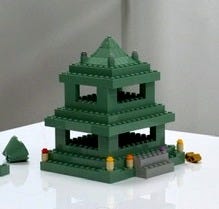
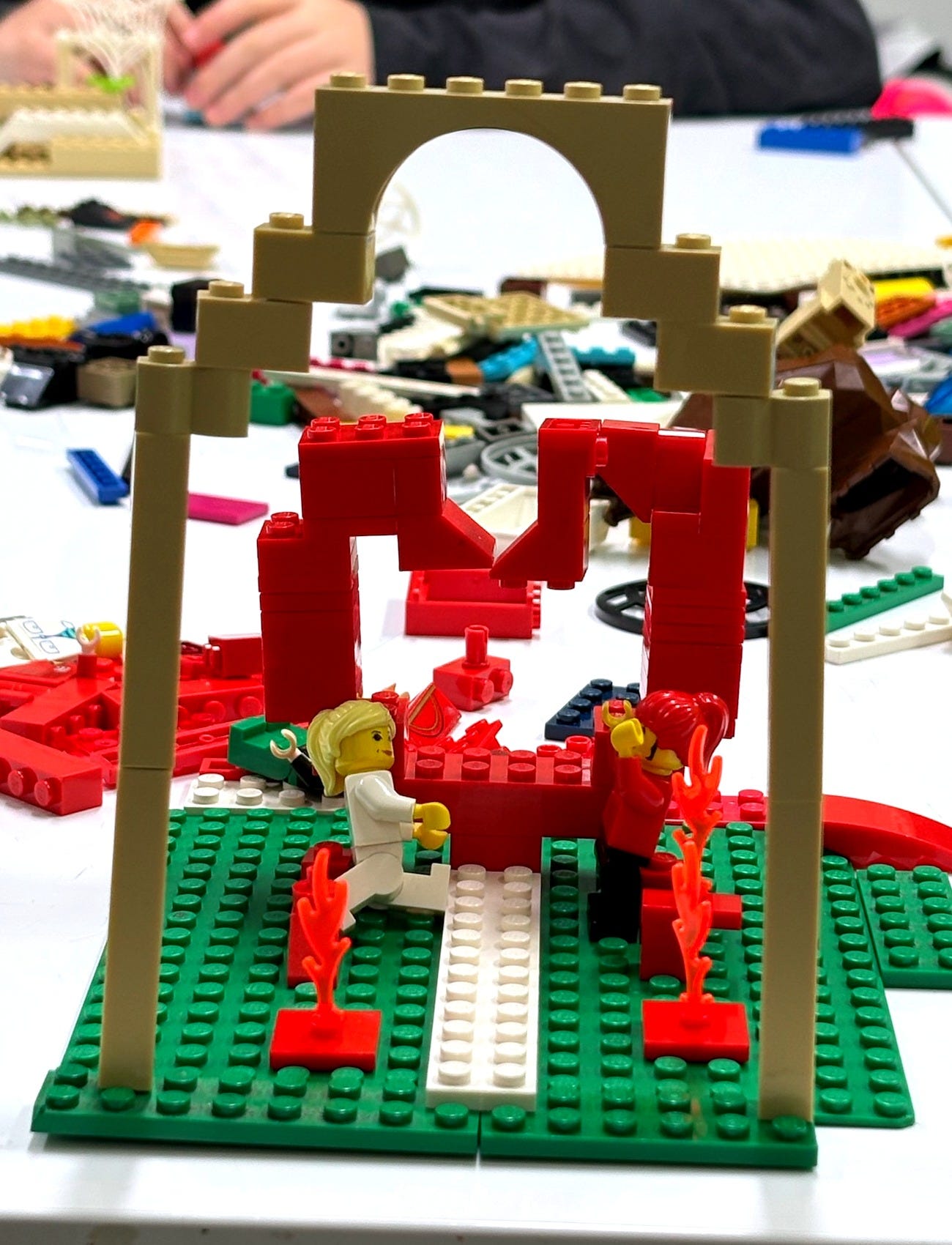
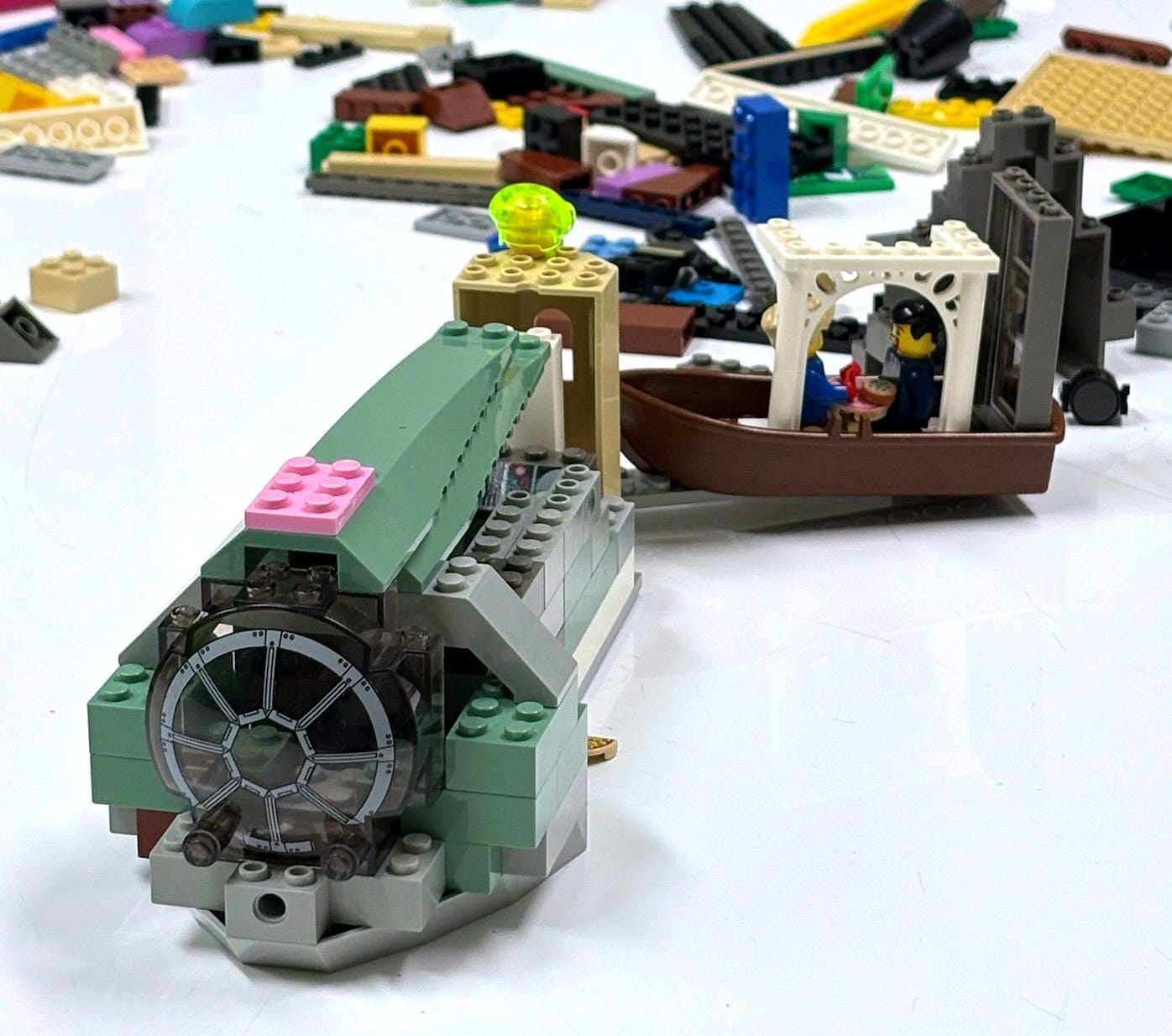
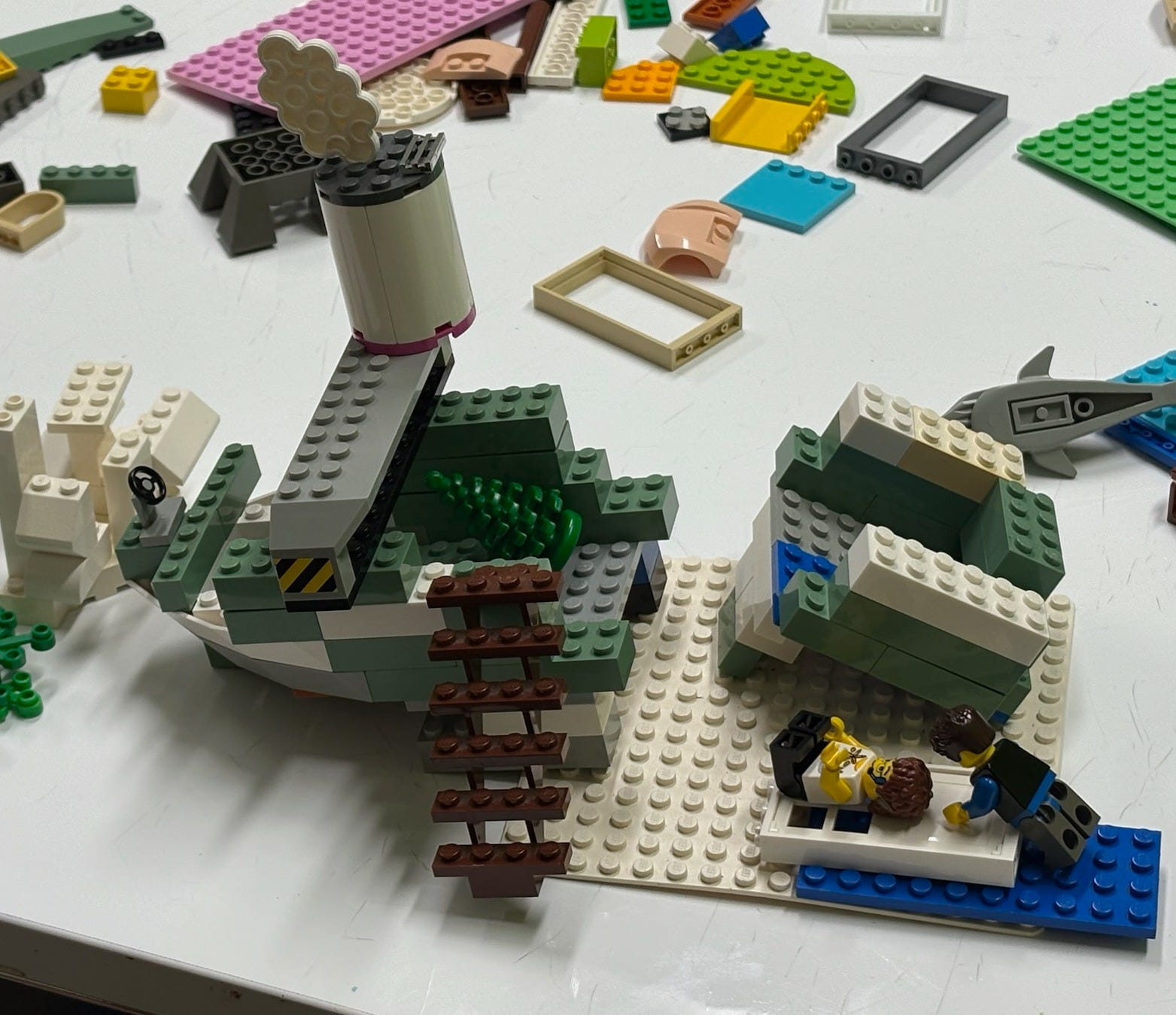
Here’s some great examples of what people have built with this prompt:
Therapeutic Benefits
While this prompt sometimes is a little scary for what might come up, I find the therapeutic benefits to be quite amazing. Here’s just a few of the pros I’ve noticed running this group over the years:
1. Narrative processing
Building the past helps teens especially (more so than kids) organize memories into a coherent story.
It lets them reflect on:
how far they’ve come
what shaped them
what they want to carry forward
2. Emotional processing
LEGO creates safe distance — it’s like seeng your memories in third-person. And it’s a way to “talk” about them without actually talking about them. I think sometimes this makes hard topics easier to process.
3. Identity development
“Who I was then” vs. “Who I am now” is something I find teens think about A LOT. This gives them a chance to explore that in a visual, tangible way.
This prompt gives them a way to explore identity without pressure.
4. Cultural pride and connection
People get to share their traditions, ancestors, share some cultural pride! Which is always fun. And a lot of time teenagers are just starting to think about their place in thousand-year histories of peoples.
I’ve also found that guiding the group discussions in this prompt help my clients get even more and more out of it. Even simple stuff like:
How does that part of your past connect to who you are now?
If you could add a “present” or “future” version next to it, what would it look like?
What feelings came up as you were building?
…can really add some profound benefits to this prompt on an individual client level. Of course, not everyone will (or should!) share personal details — but for those that do, it can be very helpful. And even for those that don’t, showing off an ancient pyramid might just be a huge confidence-booster, and there’s nothing wrong with that!
And in the end, seeing everyone’s “past moments” (whether real or imagined) lined up on the table can become a moving reminder that we all carry stories… and we’re all still building!
Thanks for reading, and Happy New Year!

I’ll only suggest this option if I think the group can handle it/is mature enough. But even if I don’t explicitly suggest it, stuff like this often comes up in people’s builds.
In fact, a lot of the pieces I suggest in my haunted house post — those are great to bring back for this prompt as well.