


The Prompt for this one is very self-explanatory: Build anything you want, but using only the smallest LEGO pieces available (nothing that takes up more space than a 2x2 plate).
Prompt Prep - Get Your Pieces Ready:
As I’ve discussed in this previous post, in my “standard LEGO bin”, I already pre-separate all of my smallest pieces into a separate bento-box type container. This container is for all pieces that are 2x2 plates or smaller (plates being 1/3 the thickness of a standard LEGO “brick”). I usually do this so that all the smallest pieces don’t quick-sand their way to the bottom of the bin and become impossible to find. Because of this, my personal prep for this prompt is pretty simple: I take the small bento box, and leave the bigger bin behind. That way, my clients ONLY have access to the smallest pieces, and aren’t tempted to use any of the bigger ones.
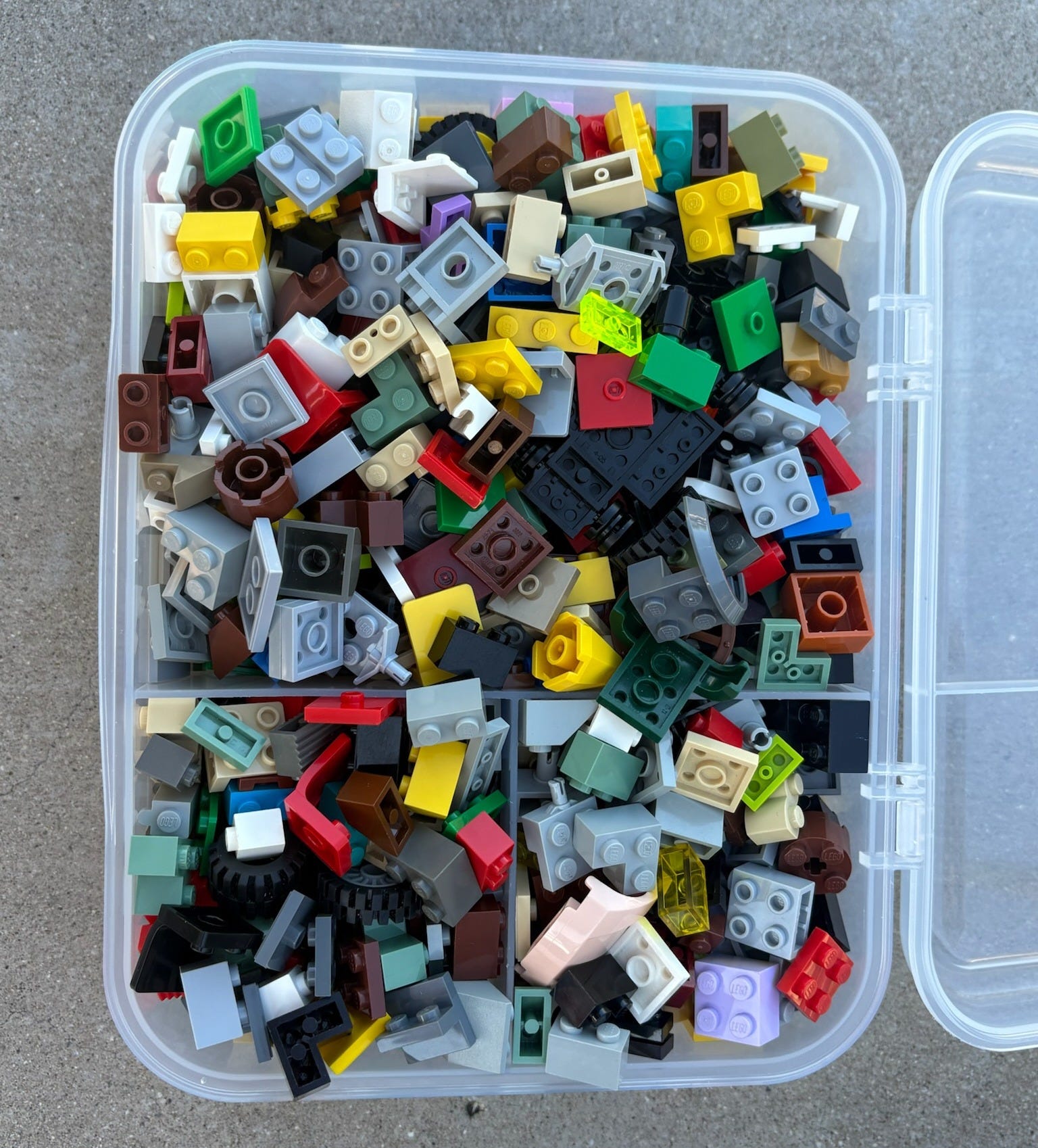
I’ve found that having about 1,500 small pieces is a pretty good goldilocks number for a group size of 4-12 Clients. It gives enough options without it being overwhelming. Since my standard bento box can only fit roughly 800 pieces, I usually fill a second bento box with more small pieces that I bring for this prompt, to ensure I have enough available. I don’t count out the pieces exactly, but after working with LEGO for so long, I’m pretty good at eye-balling piece count. This picture below is of a container about 4 inches deep and contains about 800 pieces, for reference (so I bring two of these with me for group):
Additionally, while I usually separate the more “decorative pieces” (like plants, flowers, gems, etc) into a different bin with my standard setup — for this prompt I will include the smallest decorative pieces I have and mix them in with the small piece boxes. That way, the kids have ALL my smallest pieces available, from standard 2x2 plates to shiny golden keys!
If you’re looking to expand your personal collection of small pieces, unfortunately, as of writing this, Bricklink doesn’t have a way to search/filter for only small pieces. So, if you use Bricklink (which is undergoing major updates right now as it integrates more fully with LEGO corporate), you kind of have to search for the exact piece types you want (I’ve included a more comprehensive list in my footnotes here:1 ) . But there’s also always people on eBay selling random collections of small pieces, like this, that you can go for as well.
Benefits of this Prompt
So this prompt takes a bit of prep on my (facilitator) end, but it’s definitely worth it (and not just because cleaning up is easier when all the pieces are small and just go back in the same small bento box at the end 😉) . In fact, I enjoy presenting this prompt for a lot of reasons. Of course, It’s a nice change of pace especially if I’ve done several weeks in a row of using my standard LEGO bin.
But I’ve also noticed this prompt in particular seems to be one of those prompts that actually benefits my clients while they’re participating, but then again for weeks and weeks afterwards as well.
I think that’s because following this prompt requires a pretty significant perspective shift for how to use LEGOs to achieve an artistic vision.
Like, I love specialty LEGO pieces as much as pretty much anyone else. But the problem with having, say, a pre-made dinosaur LEGO piece like this is that then there’s no reason to try to make your OWN dinosaur, custom, which you can absolutely do (with a little skill and creativity) using small LEGO pieces.
So having this prompt (which eliminates the larger pieces like that type of dinosaur but encourages more detailed work using tiny bricks) reframes the usual mindset. Instead of thinking:
“WHERE is the (pre-made) Dino piece?”
they start to think:
“HOW can I make a Dino?”.
And when they start to expand this toward anything and everything in their imagination, I can actively see it free these kids from (for lack of a better phrase) the mental “tethers” that exist because they’re looking for the work to already be done for them.
And sure, a custom-made LEGO Dino using tiny bricks might end up looking a little more “8-Bit” and pixelated compared the pre-modeled, Jurassic World-Branded Lego pieces. But this too, I see as a benefit. In fact there’s a growing wave within the larger LEGO creator community that’s encouraging LEGOs to be a little less polished and a little more, well, LEGO-y. The idea isn’t that things look exactly like what they’re meant to represent. The idea behind LEGO is to use your imagination. Let your models have elements that simply imply certain details, rather than depict them literally.
And as I mentioned, my clients tend to take these newfound skills and perspective shifts and bring them into future weeks. I see kids working in more detailed, custom, and expansive ways in the weeks after this prompt and that’s something I’m really proud of.
Also, here are some other therapeutic benefits I’ve found while working on this prompt:
Mindfulness: The small scale naturally slows people down, promoting focus and presence. Sometimes I even see this prompt becoming almost meditative for some of my participants.
Patience & perseverance: Progress is gradual and generally slower (but that’s the point!)
Sense of control: Micro-building gives participants control over every detail
Problem-solving: Making recognizable forms with limited pieces stretches creative thinking
Confidence through mastery: Completing a detailed miniature brings real pride
So through a simple limitation (using only small pieces), suddenly, my participants are receiving all of these incredible tools and benefits, along with expanding their imagination in terms of what they can build, and how they can build it.
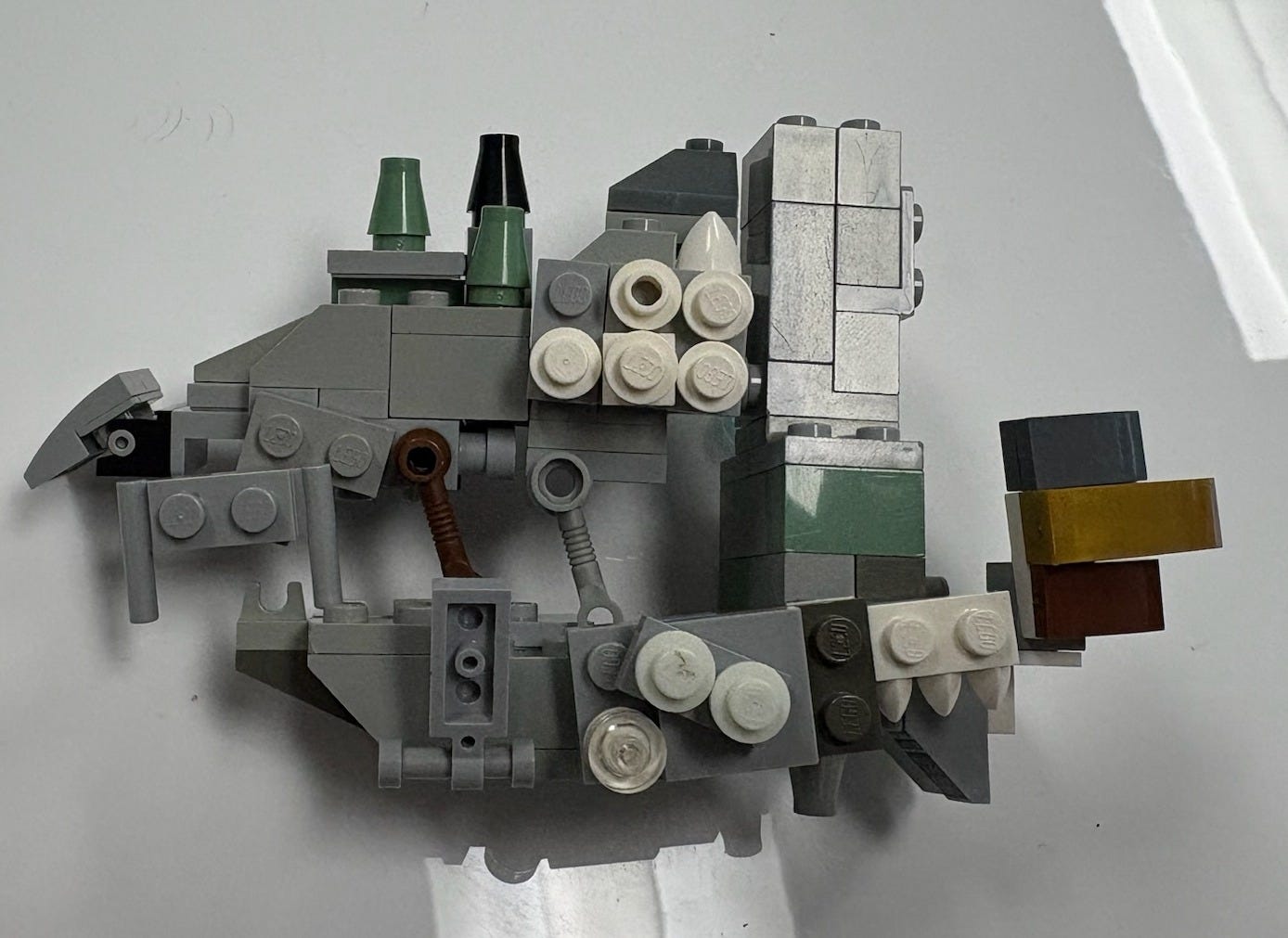
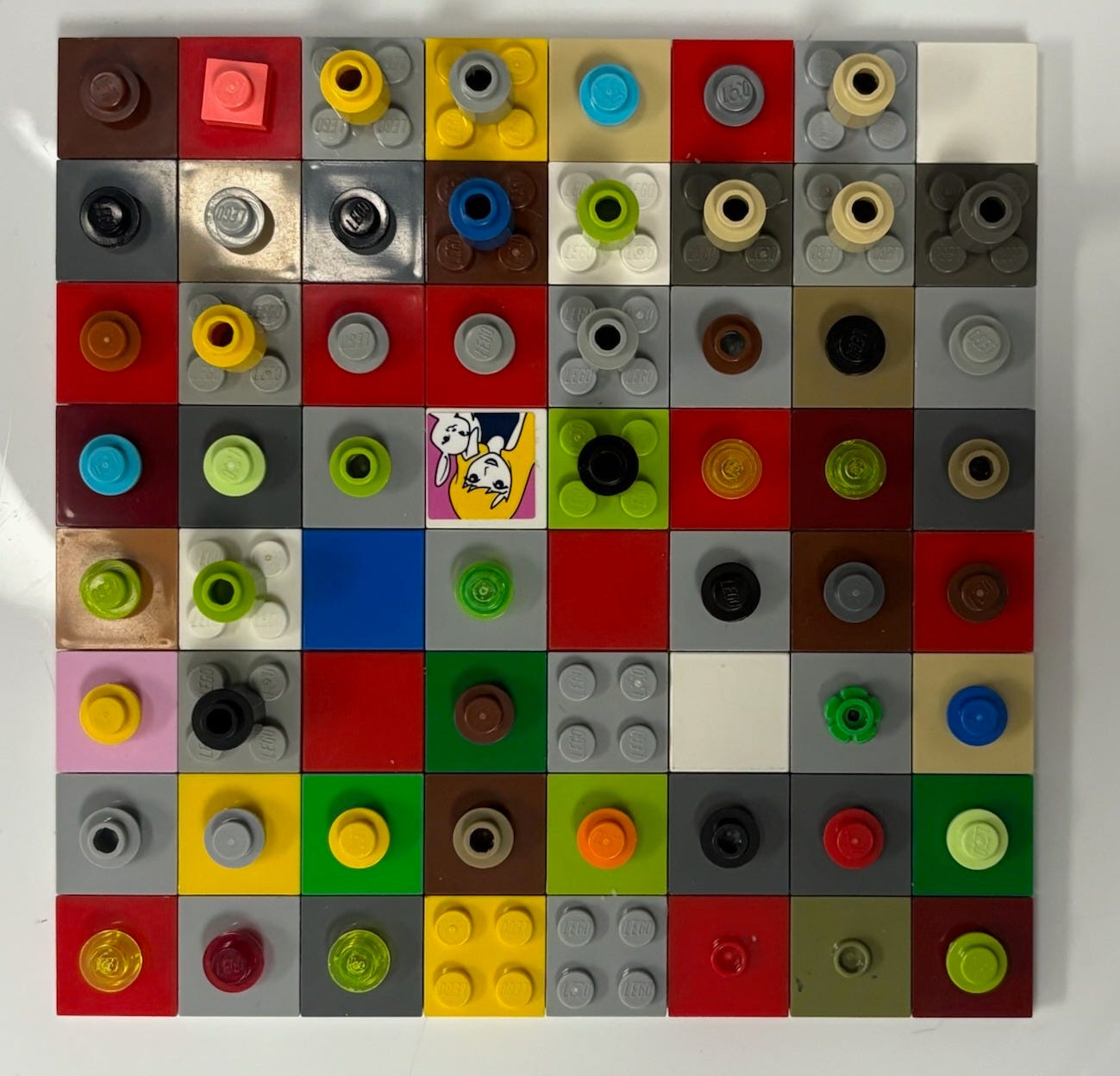
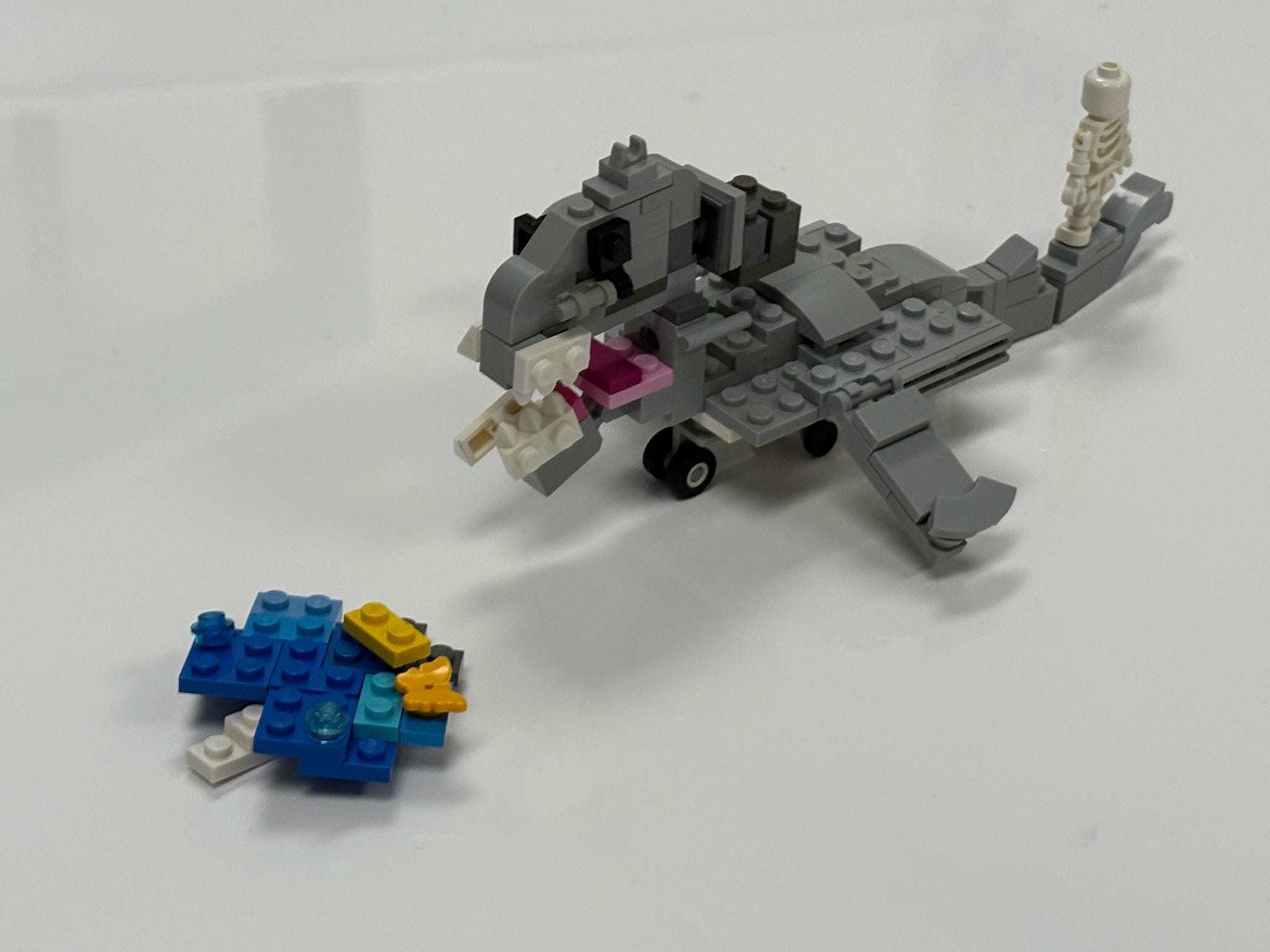
And the results have been so awesome. Here’s just a few truly impressive models that have come from this prompt:
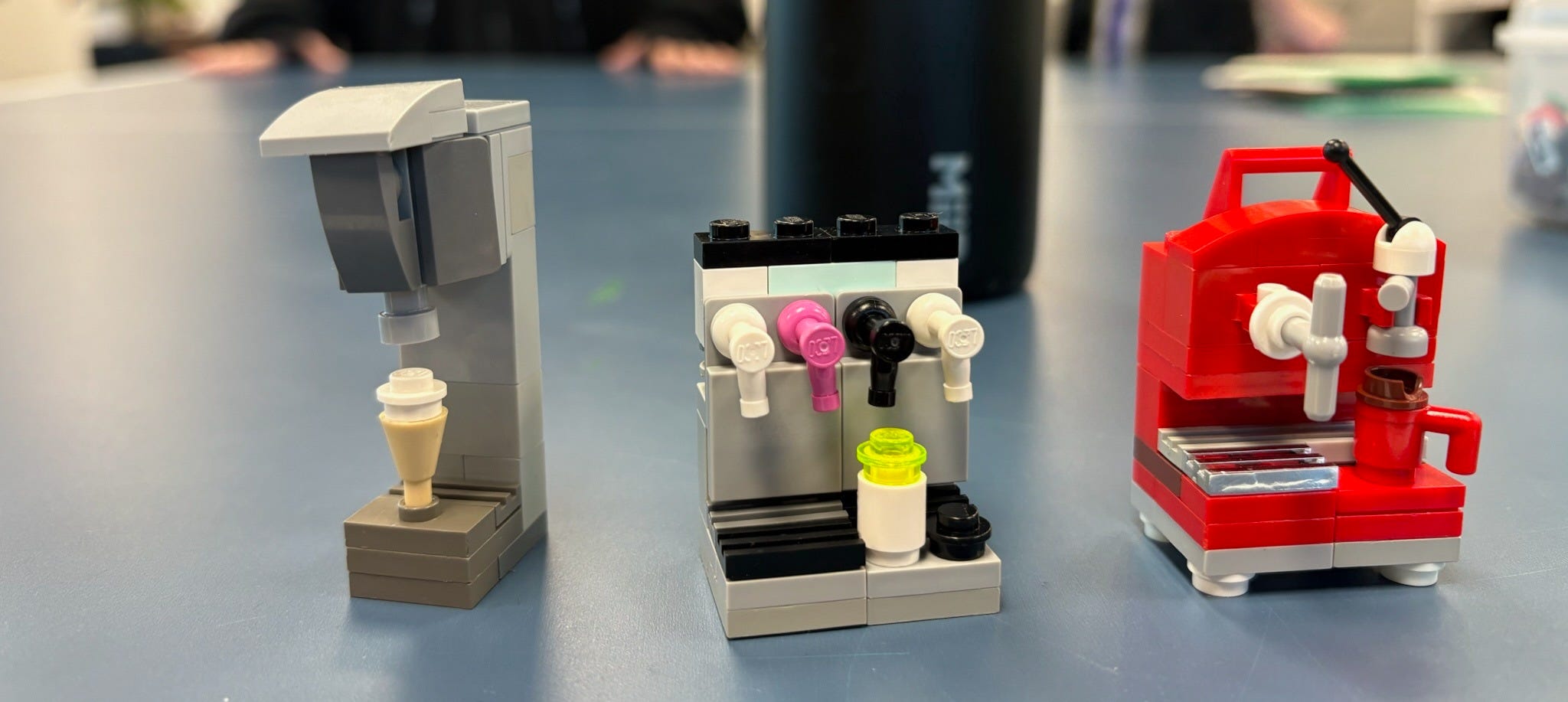
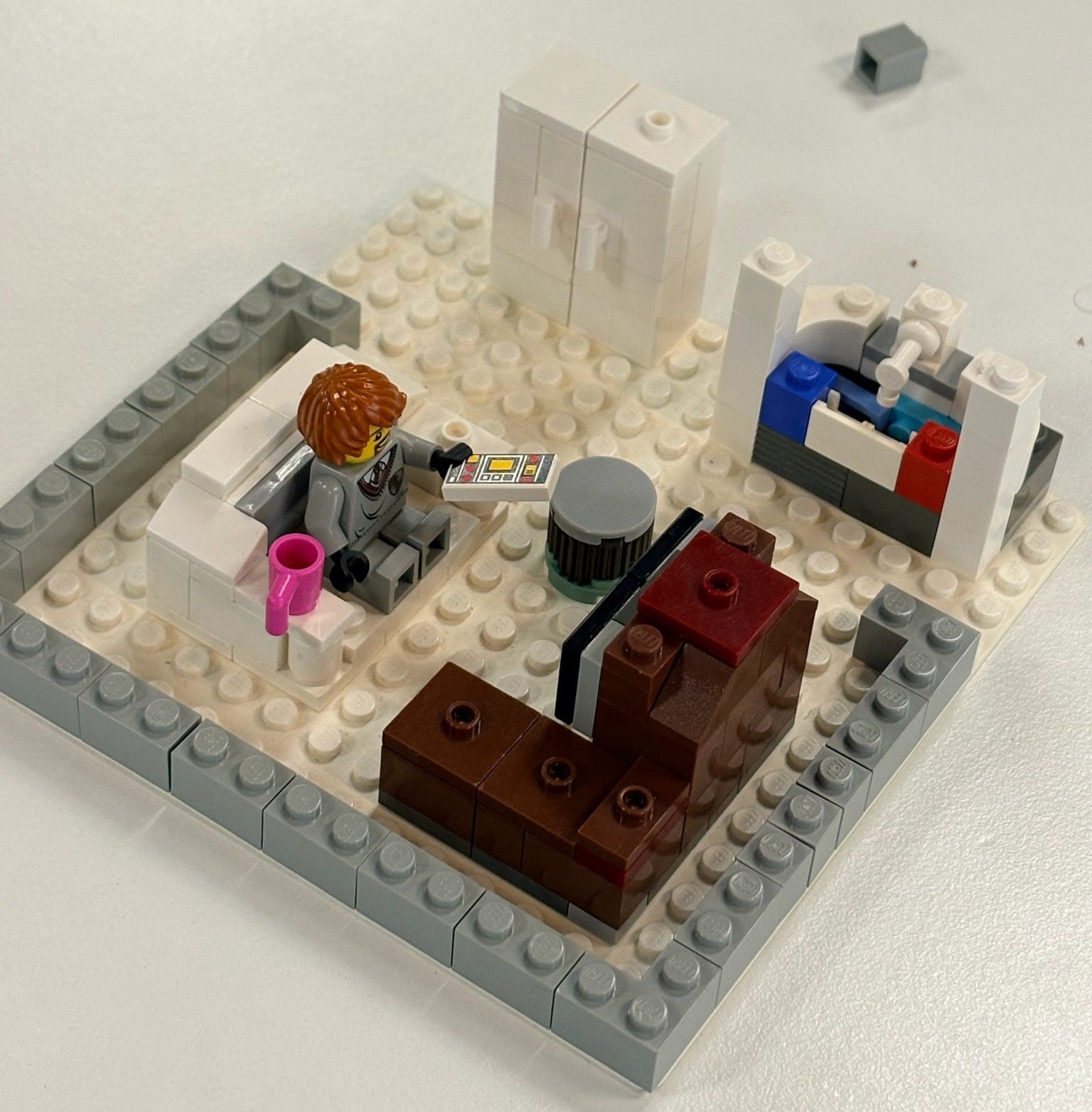
Technical Notes & Challenges
Here’s some tips, tricks, and things to note:
Remind your clients that stacking 3 “plates” gives you the same thickness as one “brick”. So even if they’re disappointed at first that they can’t use any bigger bricks, they can learn to essentially build their own bricks using this method.
Also be mindful that this prompt is physically harder than many of the others. Working on a micro scale requires much more fine-tuned motor skills. It demands steadier hands and more detailed hand-eye coordination. It also wears down your fingers faster than working on a larger scale (and as someone with carpal tunnel, this is something I’m particularly sensitive to). So just keep this all in mind, as it may be more challenging for younger groups or people with limited physical abilities.
This prompt also demands a slower, more intentional pace. This can be a nice challenge for clients that could benefit from slowing down and being more mindful, but it can also cause some push-back for the same reasons.
If someone struggles for any of these reasons, you can:
Allow short breaks
Encourage flatter builds instead of vertical ones (see the “album cover” above)
Let them switch to abstract patterns instead of representational scenes (just building from a sense of color, kind of like an abstract painting or mosaic, can decrease pressure and still allow the kids to participate and have fun)
Closing Thoughts
This prompt can also remind everyone that small doesn’t necessarily mean simple. Tiny builds often carry the most thought, care, and emotion — and they really reward patience, which is awesome. They also expand the imagination and technical skillsets in a way that benefit my clients for weeks to come.
So this may sound cheesy but I think my real lesson with this is that, sometimes, focusing on the smallest bricks helps people access the biggest ideas.
Thanks for reading!
If you do this, I recommend getting a good variety. Here’s some piece-type suggestions:
1x1 square and circle plates
1x1 bricks, tubes, & cones
1x2 plates and bricks (normal and single-stud modified)
2x2 plates (normal and single-stud modified)
(also smooth-tiled versions and slope-modified versions of all listed above)
1x1 flower plates
1x1 or 1x2 headlight pieces
handles & claws
hinge plates
vent-modified tiles
steering wheels, levers, coffee cups, megaphones, cameras, magnifying glasses, keys, coins and other accessories for minifigs
Fun pieces like LEGO bananas, pizza, cookies/waffles, coins, and GEMS
Small animal pieces like LEGO frog, spider, rats, bats, cats